Customers do not want a relationship with their storage provider. They want the unit, the gate code, and to be left alone. I have said this for years and it still gets pushback from operators who believe their tenants want a human on the line. Most tenants do not. That is exactly why the "AI or humans" debate is the wrong one.
Routine goes to the bot
The bot should take everything routine, because routine is what tenants actually contact you about. Gate hours, the code that stopped working, the invoice copy, the card update, the move-out notice. A well-connected bot resolves those faster than a person and nobody misses the wait.
Judgment goes to the human
The human is not there for warmth. The human is there for judgment. The tenant who says their unit was broken into. The card that failed three times on a long-stay customer who has never missed a payment. The lien-eligible account with an open complaint attached. The mover who is standing at the gate at 7pm with a truck and a reservation the system cannot find. A script does not resolve those, whether the script is read by a bot or by a person.
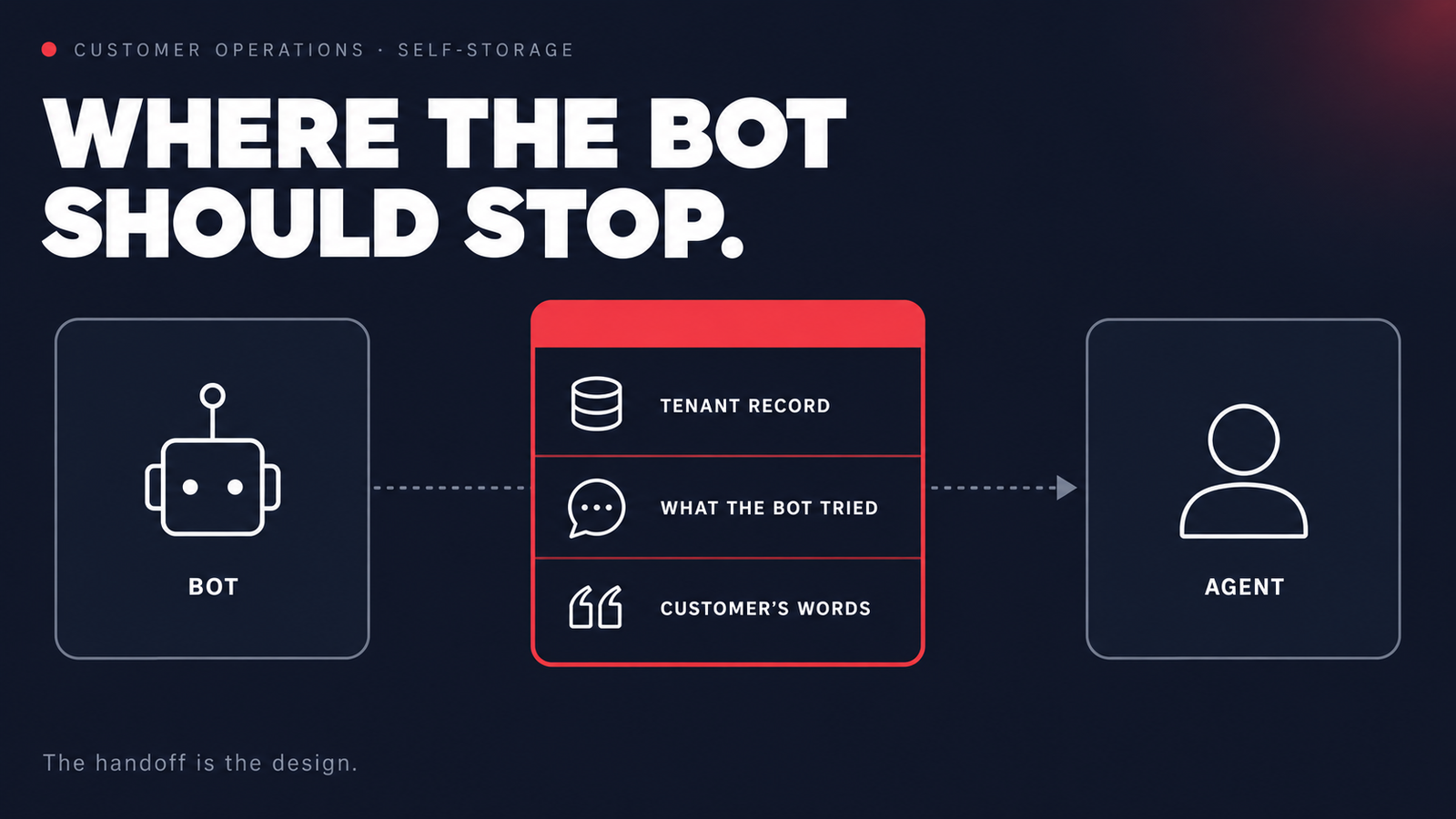
That means the thing to design is not the bot and not the team. It is the handoff between them. Most AI rollouts we see treat the handoff as a failure state, the moment the bot gave up. It is the opposite. A handoff at the right moment, with the right context attached, is the bot working correctly and stepping aside on time.
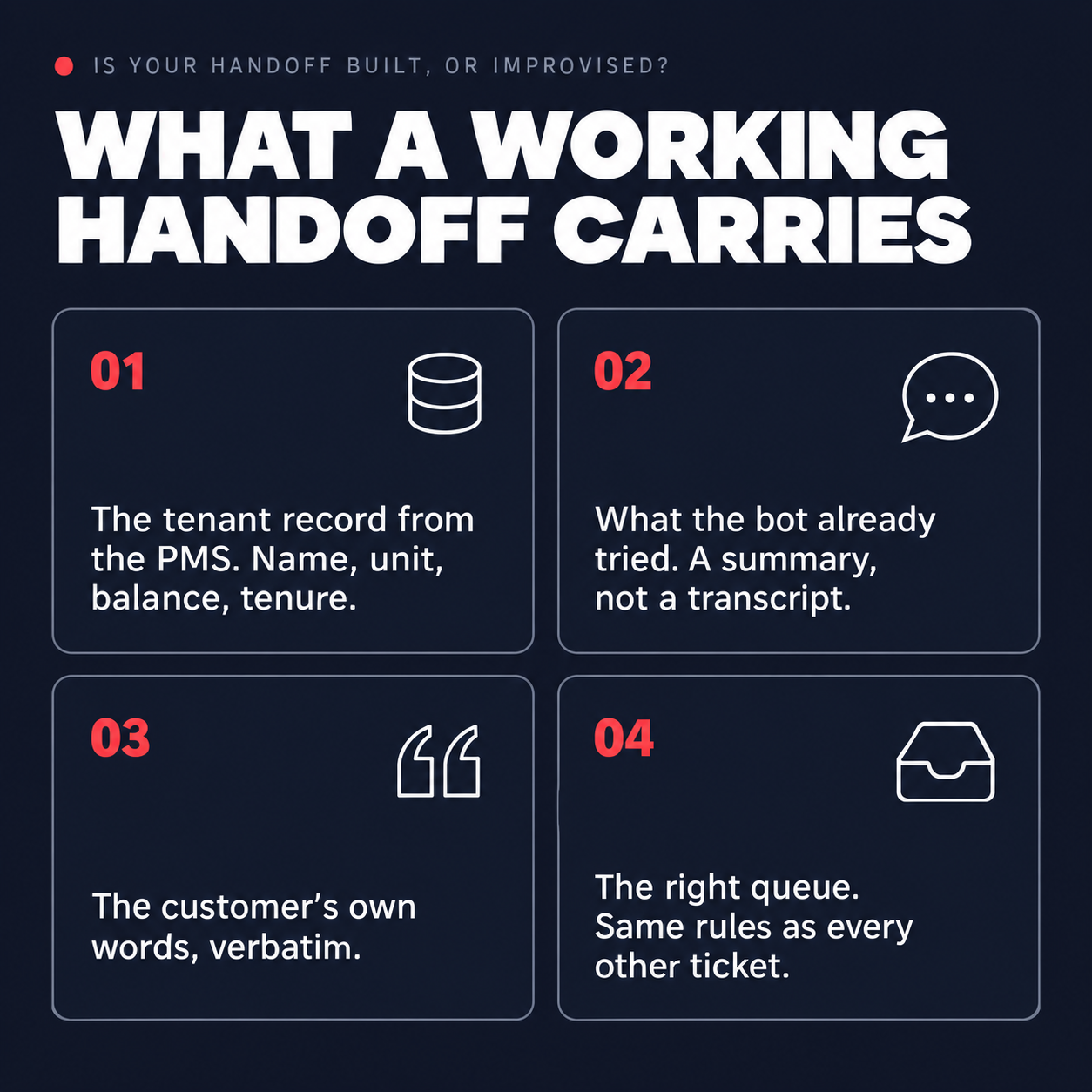
What a working handoff carries
The tenant record from the PMS. Name, unit, site, balance, tenure. Pulled automatically, not typed in by the agent.
What the bot already tried. Not the full transcript dumped into a ticket. A short summary: what the customer asked, what the bot offered, why it stopped.
The customer's own words. The one line where they explained the problem, verbatim, so the human does not paraphrase it back wrong.
The right queue. The case lands where a person is actually watching, with the same priority rules as every other ticket. Not an email to a shared inbox. Not a Slack message that scrolls away.
Policy exception, security incident, third contact this month, anything the bot would have to guess at. If you wait until the tenant is angry to hand off, the handoff is already late.
How we build it
In the front desks we build, the bot runs inside Zendesk rather than beside it. When it escalates, the ticket already carries the Storeganise record in the sidebar, the summary in the first comment, and the tenant's message above it. The agent picks it up mid-conversation, not from the start. Phone calls arrive in the same queue through the same rules, so a tenant who gives up on chat and rings instead does not become a stranger.
What breaks it
Bots made to fake empathy they cannot back with an action. Humans made to do bot-speed repetitive work because the bot only handles half of a category. And leadership reading every escalation as evidence the AI failed, which quietly pushes the team to make the bot hold on longer than it should.
Check yours in an afternoon
Pull your last ten escalations. For each one, check whether the agent had the tenant record, the bot summary and the customer's words when they opened it, and whether the customer had to repeat anything. If more than two or three fail, the bot is not your problem. The door back to a human is.
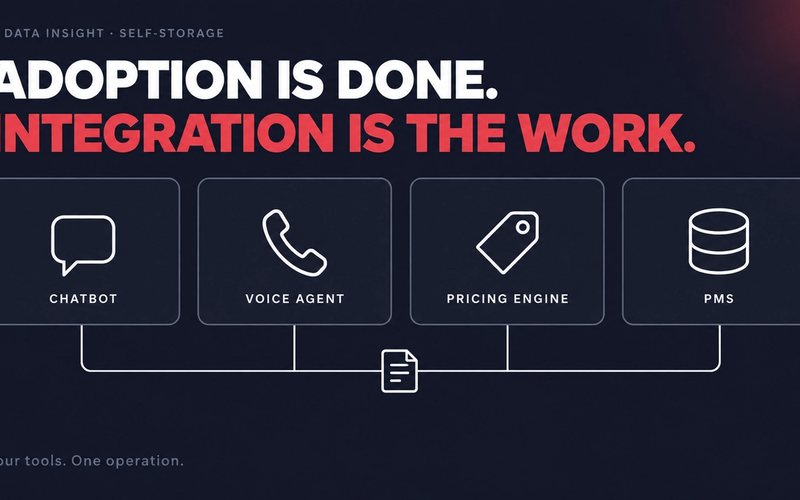
Related: Using AI Isn't the Same as Integrating It covers the connective layer that makes any of this possible.
Common questions
The moment the case needs judgment the bot cannot defend: policy exceptions, security incidents, repeat contacts, anything it would have to guess at. Trigger on the shape of the case, not on customer frustration. By the time the tenant is angry the handoff is late.
The tenant record from the PMS, a summary of what the bot already tried, the customer's own words, and delivery into the same queue and priority rules as every other ticket. If the agent has to ask the customer to start over, the handoff is not built.
Mostly no. They want the unit, the gate code and to be left alone. The human matters on the small number of cases that need a decision, not on routine contact.
Usually the tool was dropped next to the workflow instead of built into it. The bot clears routine questions, then escalates without context, so every hard case becomes a fresh ticket and the customer repeats themselves.
Pull your last ten escalations. Check whether the agent had full context on open, whether the customer repeated anything, and whether it resolved without a second escalation.