Every few weeks an operator asks me some version of the same question. "We're thinking about switching the PMS. Or adding AI. Or we just bought three sites in another country. What should we do first?"
The answer is that I don't know yet, and neither do they. Not because the question is hard, but because nobody has drawn the picture. The systems were bought one at a time as the business grew. Each one made sense on the day. Nobody has stood back and looked at all of them together, so every new decision gets made against the last decision instead of against the whole.
An architecture review is standing back and drawing the picture. Here's what it produces, because "review" is a vague word and the deliverables are not.
One page: where you are and where you're going
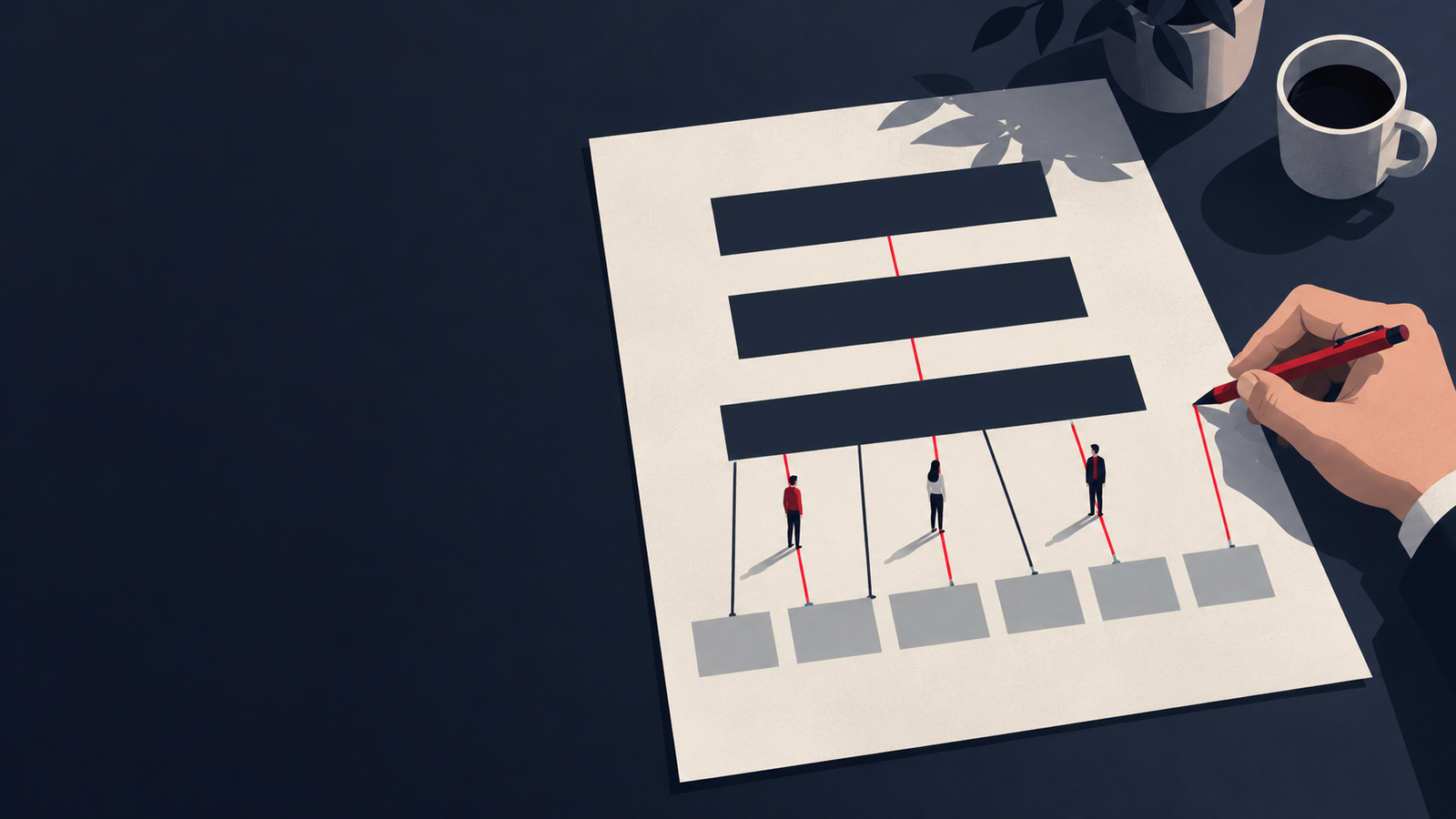
The first thing you get is your current architecture on a single page. Every system, who owns it, what it talks to, and where a human is re-typing numbers from one screen into another. Operators are usually surprised by this page. Not by what's on it, they knew about every system, but by how many arrows there are and how many of them are a person.
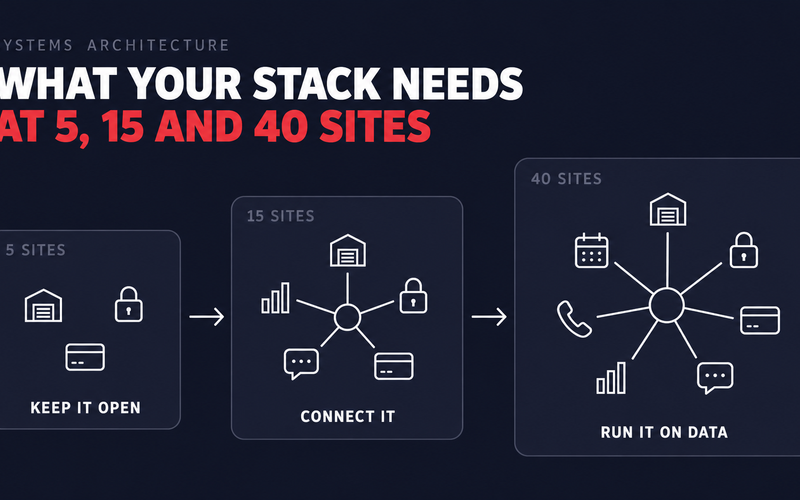
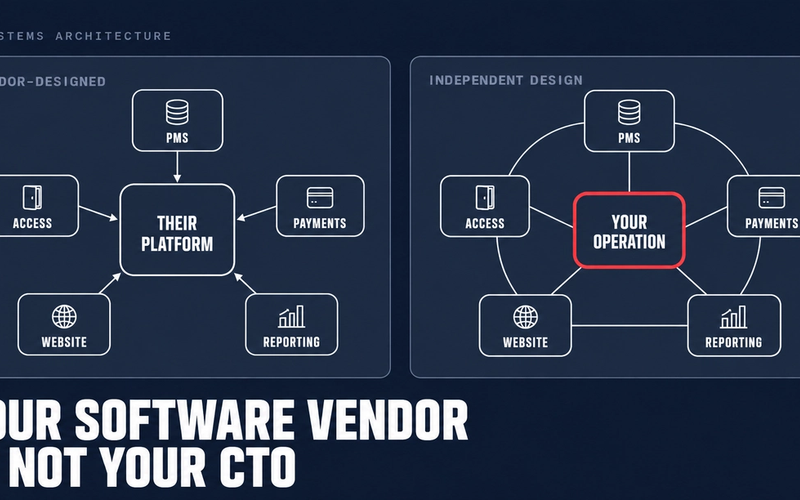
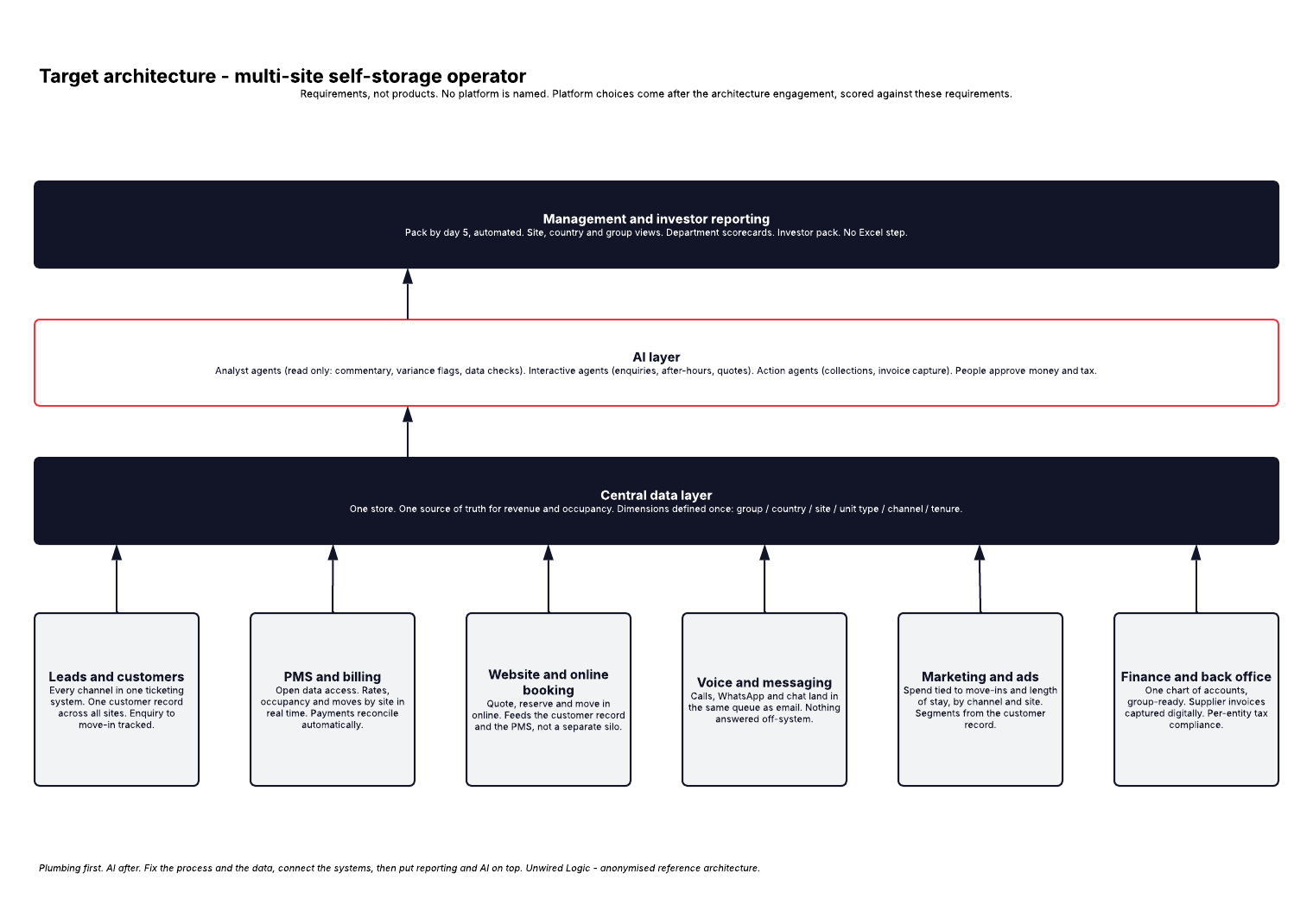
Next to it is the target. Same page, same layers, but drawn as requirements rather than products. Leads and customers in one place. A PMS with open data access. A central data layer so the group number and the site number come from the same store. Reporting that doesn't need an Excel step. AI on top, after the data underneath it is clean.
No platform is named on the target page. That's deliberate. If the picture says "buy X", you've bought a recommendation. If the picture says "you need open data access and a single customer record", you can take it to any vendor and score them against it. The architecture is yours. It has to work without us in the room.
What's broken, what it costs, what to fix first
The second thing you get is a short, uncomfortable list. Not every problem, just the ones bleeding. The Saturday enquiry nobody calls back. The month-end that takes seven days because three systems disagree about revenue. The integration someone built in 2021 that nobody can explain.
Each one comes with a number: what it costs you today, in missed move-ins, in hours, or in decisions you're making late. And an order. Fix what's bleeding, not what's oldest. The PMS that's ten years old but works is not the first job. The lead that went unanswered this morning is.
A roadmap with owners, in chunks
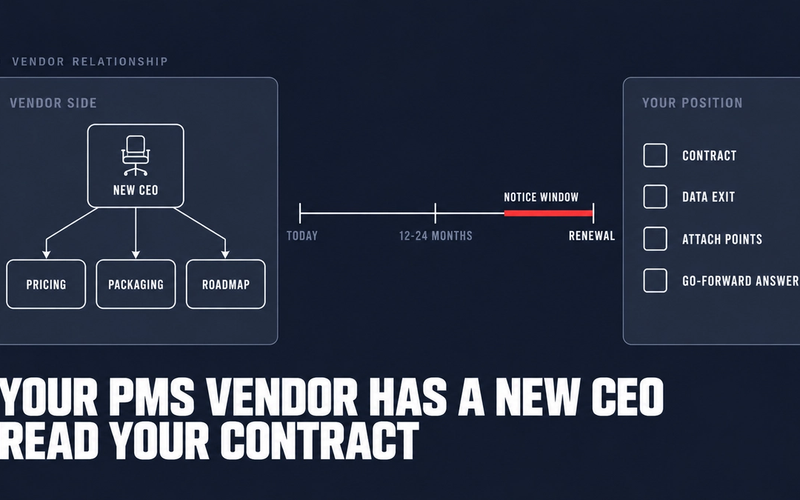
The third thing is the roadmap, 12 to 24 months, sequenced. Every chunk is small enough to finish, has a cost band, and has a name next to it: us, your team, or another vendor working to the design. The first chunk is priced fixed so you can start without a leap of faith.
This is the part that stops a review being a PowerPoint. A deck tells you what to do. A roadmap with owners tells you who's doing it next month and what it costs. We stay through delivery, whether or not we're the ones building.
The build-versus-buy calls
Somewhere in every review there's a moment where someone says "we could just build that." Sometimes they're right. Usually they're not, and the reason isn't that custom software is bad. It's that custom software is a promise to maintain it, forever, with whoever built it. Every integration is that same promise in miniature.
So the review makes those calls explicitly, one by one, and writes down why. Buy here. Build this small thing because nothing exists. Keep the old system because the data comes out fine and replacing it solves nothing. The last one surprises people. A review that tells you not to spend money is doing its job.
What it isn't
It isn't an audit of your team. Nobody's performance goes in the document. It isn't a sales process for our software; the roadmap works if you never buy anything from us. It's three to four weeks, not a strategy offsite: one read-only pass over your data, interviews with the people who actually run the systems, and a working session with you at the end where we go through the page and argue about it.
If you're at the point where the next technology decision is bigger than the next tool, the picture is the place to start. Draw it before the frenzy to fix something makes the decision for you. That's a line I hold now because I've skipped it, and it bit me.
← Back to the blog