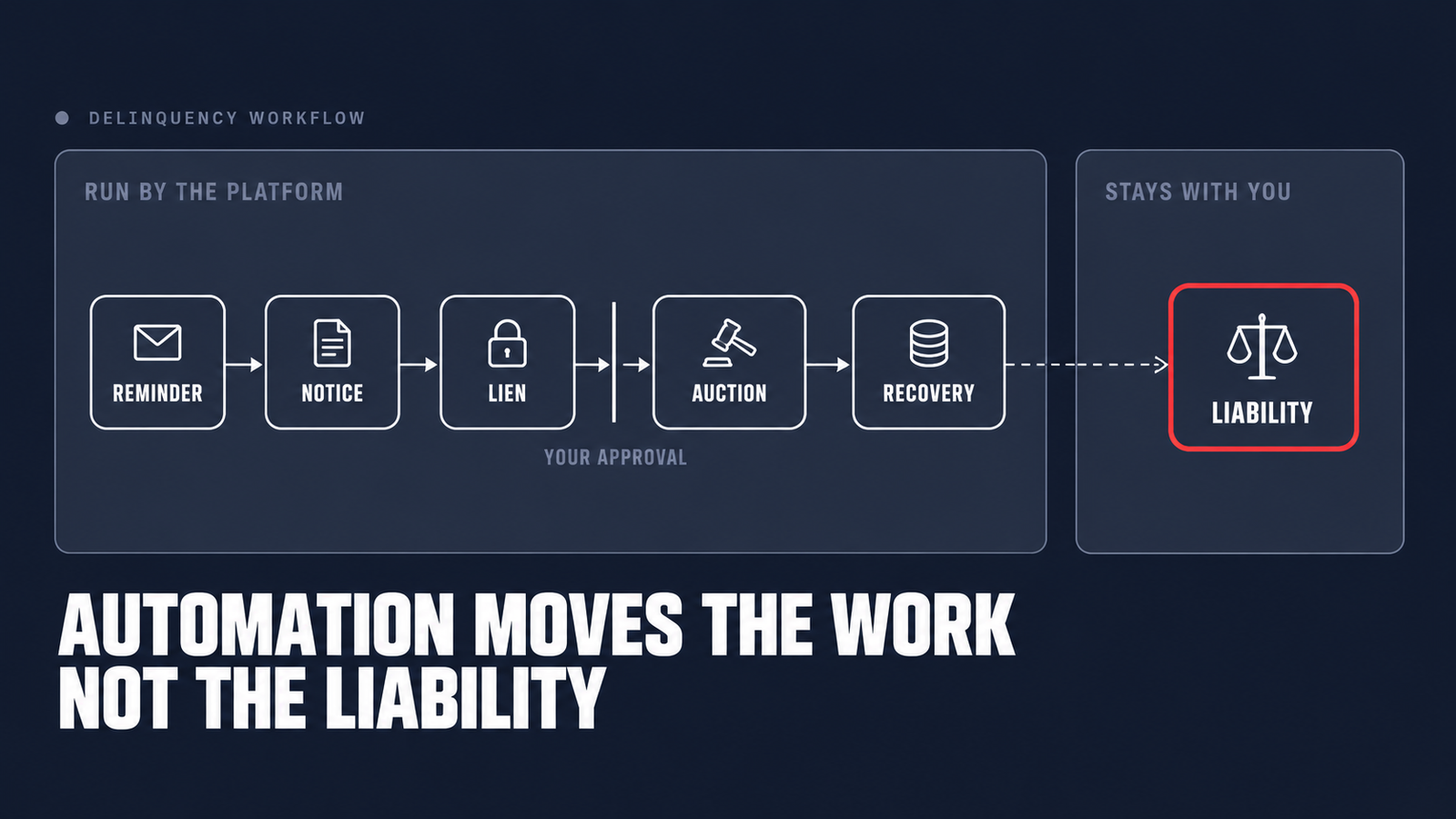
Delinquency is the latest self-storage workflow to get the end-to-end automation treatment, and it's one where a software mistake can put your company in front of a judge. That should change how you shop for it.
The trigger is a US launch. Ai Lean recently released a rebuilt recovery platform that runs the whole delinquent-account lifecycle on one system: collection outreach from the first missed payment, lien enforcement with a compliance engine covering all 50 US states, auction through its BidHaven marketplace, a rent-ready workflow to turn the unit back over, and licensed recovery on whatever balance survives the sale. The company says multi-site operators on its technology have cut delinquency by as much as 80% and recovered hundreds of staff hours a month.
The platform is American. The category is coming to every market.
Manual isn't the safe option
I believe the staff-hours number. Delinquency is exactly what automation is for - rules-based, deadline-driven, clerical. It's also the workflow most operators run worst.
In a typical multi-site portfolio, lien handling sits with site managers. Some follow the notice calendar to the day. Some batch it monthly. Some work from a folder of templates left by three managers ago. That inconsistency isn't just untidy. Inconsistent process across sites is how operators end up settling wrongful-sale claims.
A system that makes every site run the same clock is a big upgrade. So this isn't a piece telling you to keep doing it by hand. Manual is the risky option with better PR.
The workload moves. The liability doesn't.
Launch coverage described the platform's audit trail as a way to shift legal exposure off the operator. An audit trail helps you defend a claim. It doesn't change whose name is on it.
When a unit gets sold on a bad notice - wrong address, wrong waiting period, a law that changed and the software hadn't caught up - the tenant's claim lands on the facility first. Your name is on the sale. Your lawyers handle the claim. Your insurer asks the questions. The vendor sold you software. You still own the legal process it executes.
Lien and debt-recovery rules differ by country, and in some markets by state or province. Whatever platform you look at, check it against your local law with your own legal adviser, not the vendor's summary of it.
That means you underwrite a delinquency platform the way you'd underwrite a law firm, not a chatbot.
Four checks before you sign
Test the audit trail instead of admiring it. Every vendor in this category says "complete audit trail." Make it operational. Pick one delinquent unit and ask the vendor to produce, in one export you could hand to a lawyer, every notice sent, the delivery evidence, the timestamps, and the legal step each action satisfied. If that takes a support ticket, it's not an audit trail. It's a log. The day you need it is the day a wrongful-sale letter arrives, and a support ticket isn't fast enough.
Ask how law changes reach the engine, and who pays if one doesn't. A multi-jurisdiction compliance engine is a moving target, because notice and lien rules get amended. Ask the specific question: when a jurisdiction changes its required notice period, what's your process and turnaround for shipping the change, and when did you last do it? Then read the one clause that matters. If the software runs a legally defective process and you get sued, does the vendor indemnify you, cap its exposure at your subscription fee, or disclaim the whole thing as the operator's responsibility? Most software contracts do the last one. Don't walk away over it. Just know you're buying process consistency, not risk transfer.
Look at where the human checkpoints sit. Ai Lean positions the platform as keeping people involved when judgment is needed. The question is whether that judgment sits before or after the irreversible steps. A payment reminder is reversible. Cutting a lock, listing a unit for auction and completing a sale aren't. You want a named approval - yours, not the vendor's - gating every irreversible action, enforced as a workflow step, not a courtesy email someone can miss.
Count what happens if you leave. Bundling collections, lien processing, auction and post-sale recovery into one vendor is the pitch. Structurally, it puts the entire legal tail of your revenue through one dependency. Ask the export question before you're inside: if we terminate, do we get full account histories, notice records and audit documentation out at full fidelity? An audit trail you can't take with you stops protecting you when the contract ends, and claims can arrive years later.
Buy it if the diligence holds
A specialised vendor watching the rules full-time will catch changes your area managers won't. Standardised process across sites reduces liability, probably by more than any single software risk it introduces. And the labour case is real - lien administration is some of the most expensive clerical work in the building, because errors cost so much.
My point is the category, not the company. Collections and lien automation will be on every mid-market operator's radar within a couple of years, from specialist vendors and from the PMS platforms that will build or buy their way in. Buy it if the diligence holds. Just know which part you handed over and which part you kept: the vendor took the clerical work, and you kept the courtroom.
Mapping which of your systems execute processes you're legally liable for, and what evidence you could produce if challenged, is part of what our architecture review covers.
← Back to the blog