Most of what's written about AI in self-storage is hype - smart facilities, robot everything, "the future of storage." Meanwhile the wins actually available today are boring. Boring is where the money is.
I operated self-storage for 13 years and I've spent 24 in this industry, and I've watched plenty of technology waves arrive with a parade and leave without changing how a single unit gets rented. AI is different, but not in the way the parade says. Here's what's real.
What works right now
None of this is futuristic. Operators run all of it today on standard tools.
Answering enquiries after hours, instantly, in any language. Storage enquiries don't keep office hours - the customer dealing with a move or a death in the family is searching at 10pm. An AI agent that gives a correct price, unit availability, and a booking link at 10pm wins business your competitor's voicemail loses. The any-language part matters more than people expect, especially in markets with big expat and migrant populations - which is most cities with storage demand.
Drafting replies for your team. The agent reads the enquiry and drafts the response; your person reviews and sends. Response time drops from minutes to seconds, quality gets more consistent, and nobody's job disappears - the queue just stops backing up.
Summarizing calls. Every phone call becomes a written summary attached to the customer record without anyone typing notes. Small, dull, and it compounds: a year later you have searchable history on every tenant instead of whatever the manager remembered to write down.
Flagging arrears patterns. A busy manager misses the tenant who's paid late three months running and just stopped answering email. A model watching payment behavior doesn't. Catching that account at day 5 instead of day 40 is the difference between a phone call and a lien process.
Notice what's missing from this list: nothing customer-facing pretends to be human, nothing replaces judgment, and nothing requires a "digital transformation." It's all queue work - the high-volume, low-judgment traffic that eats your team's day.
The prerequisite people skip
AI needs ground to stand on.
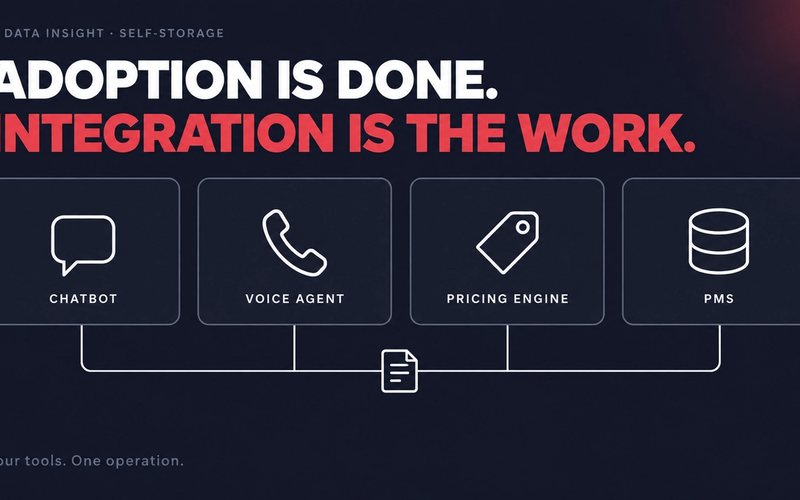
If your enquiries are scattered across five inboxes and a personal WhatsApp, there's no queue for an AI to work. If your data lives in disconnected systems that disagree about basic facts, a model trained on it produces confident nonsense. AI multiplies whatever foundation you give it - including a bad one.
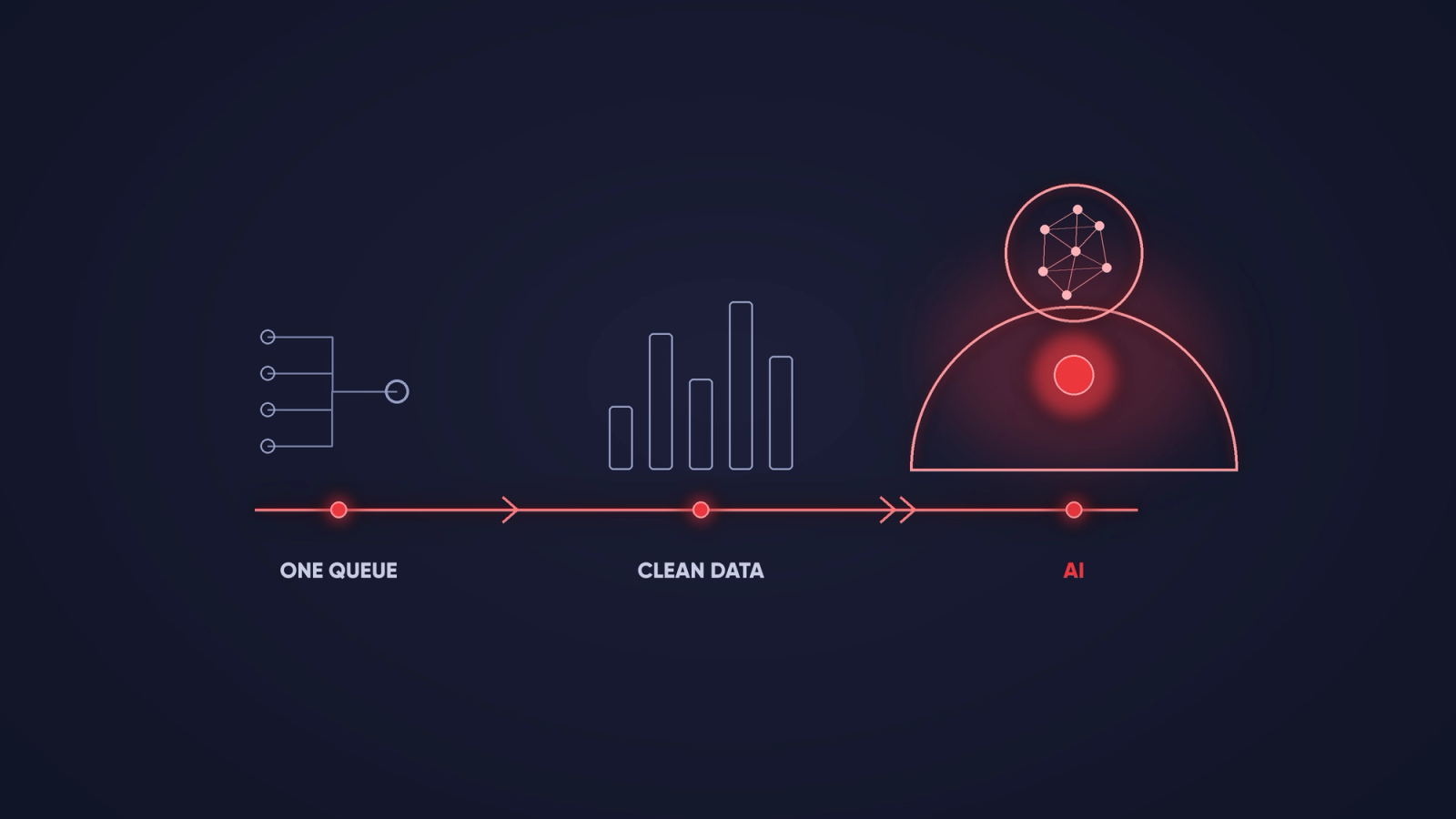
So the sequence matters: one queue for every channel first, clean centralized numbers second, AI third. Operators who skip to step three pay twice - once for the AI that disappoints, then again for the plumbing they should have built first. The vendors selling step three rarely mention steps one and two, because plumbing doesn't demo well.
This is also the honest answer to "is AI overhyped?" The models are real. The gap is that most storage operations aren't ready to receive them - and readiness is unglamorous work no keynote will sell you.
Start small and specific
The way in is not a strategy deck. It's one question.
Find your single highest-volume enquiry - it's almost certainly "what does a unit cost?" - and automate a perfect, instant answer to that one thing. Price, sizes, availability, booking link, every channel, any hour. Measure what happened: response times, after-hours conversions, how many enquiries never needed a human at all.
Then take the next-highest-volume question and do it again.
That's the whole method. Each step is small enough to ship in weeks, cheap enough that a miss doesn't hurt, and measurable enough that you'll know the difference between progress and a demo. Twelve months of that beats any transformation program I've seen - because by the end you have a dozen boring wins that show up in the numbers, instead of one impressive pilot that never left the slide deck.
The hype will keep coming. Let it. Boring, measured, one question at a time - that's how AI actually gets into a storage business.
← Back to the blog