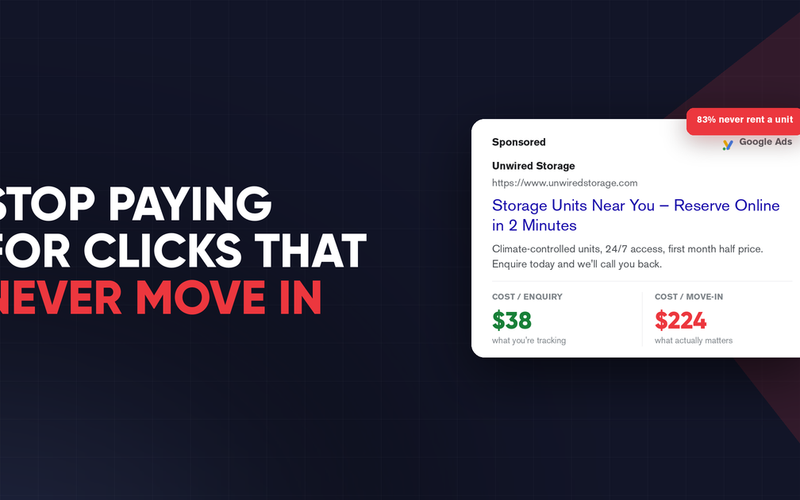
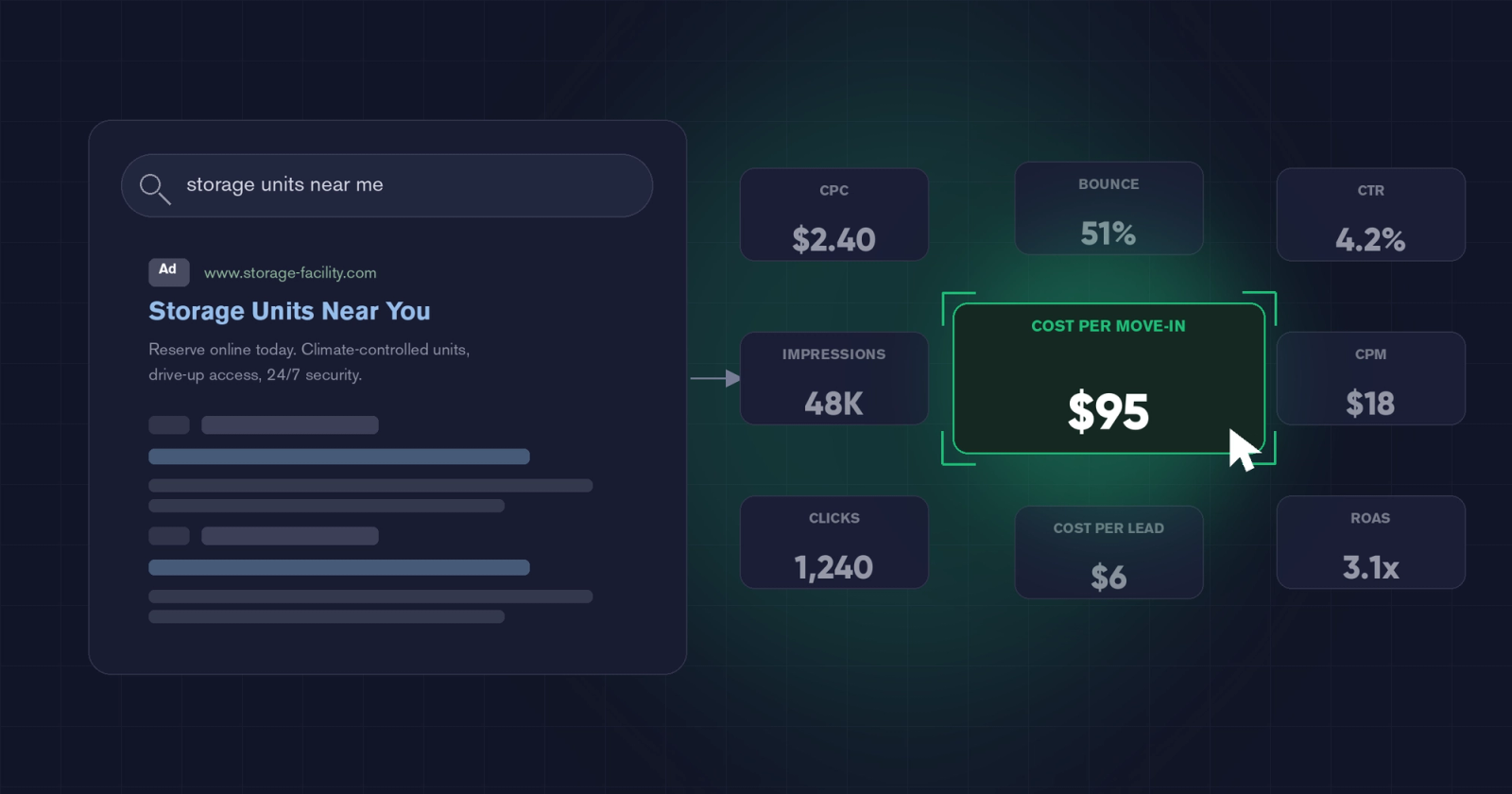
If you're paying for Google or Meta ads, your agency probably reports cost per lead. That number is close to useless, and budgets allocated on it routinely flow to exactly the wrong campaigns. The only acquisition number that matters in storage is cost per move-in.
I operated self-storage for 13 years. The gap between those two numbers - per lead and per move-in - is where most operators' ad spend quietly leaks away.
The leak
A lead isn't revenue. A move-in is. Between them sits a chain: a click becomes an enquiry, an enquiry becomes a conversation, a conversation becomes a booking, a booking becomes a tenant. Losses happen at every link, and they don't happen evenly across campaigns.
Cost per lead measures the first link and ignores the rest. So a campaign can look cheap while producing enquiries that never become tenants - tyre-kickers, wrong location, people comparing prices for a move that's three months away. Another campaign can look expensive while quietly producing the customers who actually move in and stay.
A worked example
Two search campaigns, same facility, one month.
Campaign A targets "cheap storage near me." Spend $600, 100 leads. Cost per lead: $6. The agency's chart loves it.
Campaign B targets "storage units [your suburb]" with price on the landing page. Spend $570, 30 leads. Cost per lead: $19. On the chart, it's the embarrassing one.
Now trace both to the move-in record. Campaign A's bargain-hunters convert at 4% - four tenants, mostly on the smallest units. Cost per move-in: $150. Campaign B's leads convert at 20% - six tenants. Cost per move-in: $95.
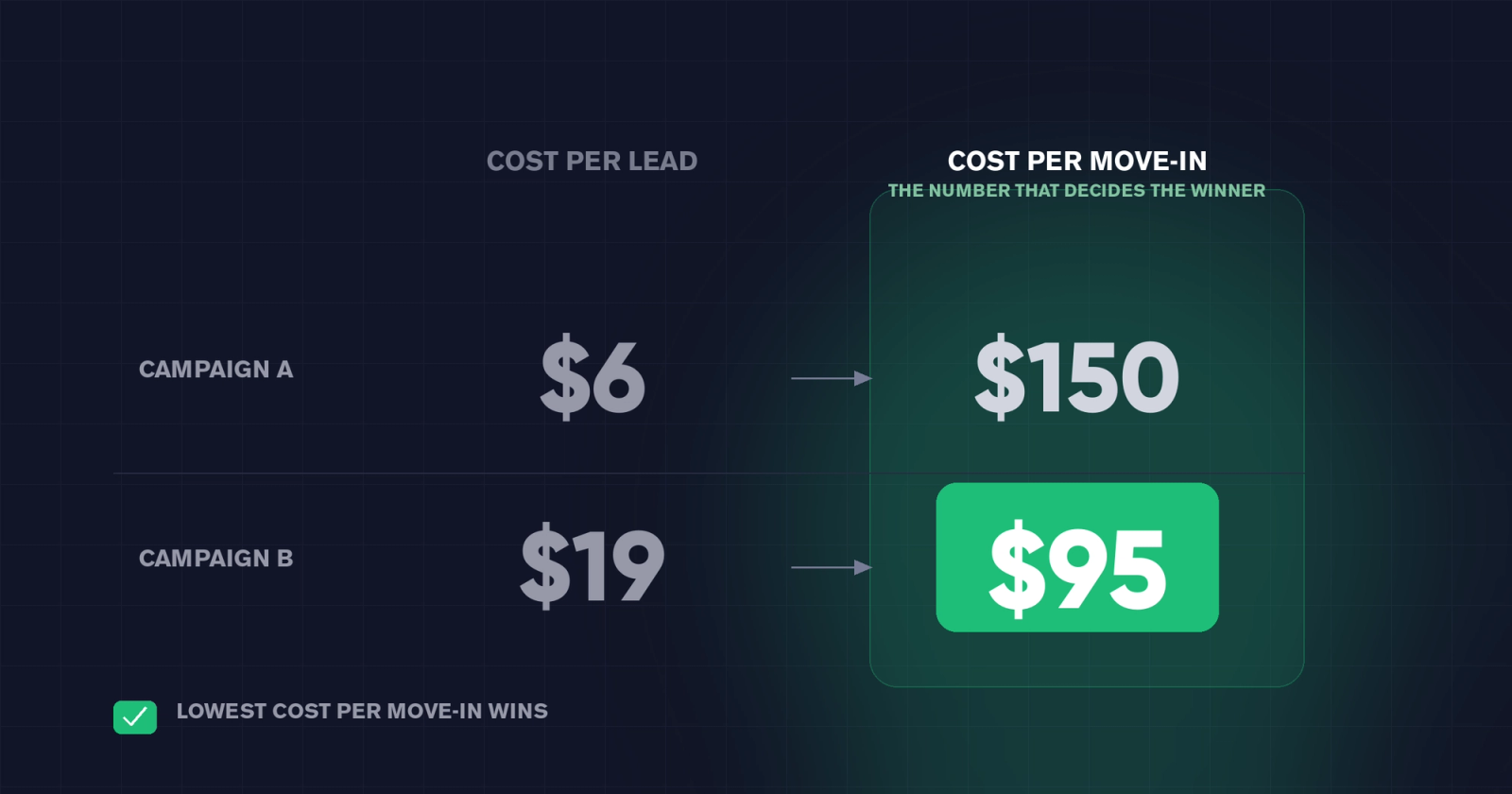
Judged on cost per lead, you'd shift budget from B to A and feel good doing it. Judged on cost per move-in, B is producing tenants at two-thirds the cost - and in my experience the difference compounds, because the customer who searched for your suburb and saw a price before enquiring tends to stay longer than the one who searched "cheap."
Same ad account, same month, opposite decisions. That's what reporting on the wrong number does.
Why agencies report cost per lead
Not malice - visibility. Your agency can see the ad account and the form fills. They can't see your PMS, so they can't see move-ins, so they report what they can see and the chain ends at the lead. The result is an optimization loop pointed at the wrong target: the agency tunes campaigns to produce cheaper leads, which often means MORE bargain-hunters, which makes the real number worse while the reported number improves.
That is on the operator to fix, not the agency. Nobody else can connect their spend to their tenants.
Tracing it isn't exotic
The fix is configuration work, not a project - three links in a chain.
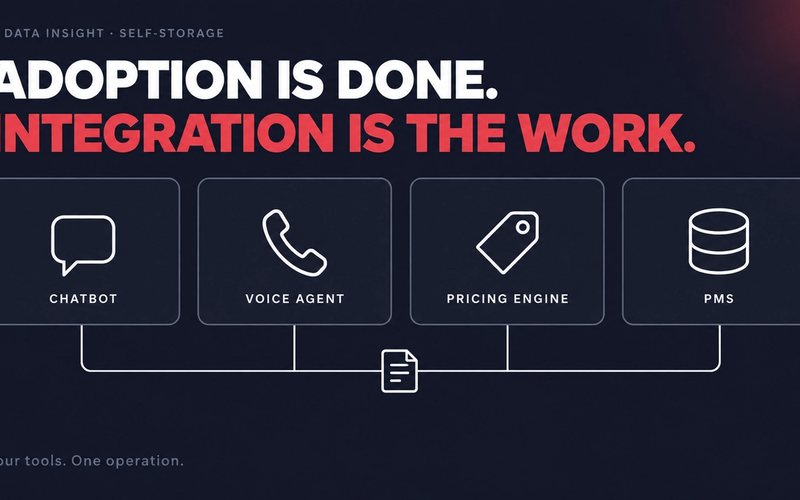
Tag the source on every enquiry. Where did this person come from - which campaign, which channel? UTM parameters on web forms, tracking numbers on phone, channel tags on chat and WhatsApp. If your enquiries land in one queue (one system, every channel), this is a settings exercise. If they're scattered across five inboxes, fix that first - it's the same plumbing problem wearing a different hat.
Carry the tag to the move-in record. When the enquiry becomes a tenant, the source rides along into the PMS or gets joined later in reporting. This is the link almost everyone is missing, and it's the cheapest one to build.
Report spend against move-ins, by campaign. Now the same chart your agency sends becomes a chart worth reading: dollars in, tenants out, campaign by campaign.
Once it's wired, it runs by itself, and every future ad dollar is spent against the truth instead of a proxy.
The one question
Ask your agency this week: "What's our cost per move-in, by campaign?"
A good agency will say they need move-in data from you and help build the link - keep them. An agency that responds with a better-looking cost-per-lead chart has told you something useful too.
And if the answer is a shrug, you've just found wasted spend without opening a single report. You don't know which half of your budget is working - and right now, neither does anyone else.
← Back to the blog