Most self-storage operators run their sales on a B2B CRM - HubSpot, Pipedrive, Sugar, something in that family. I think that's the wrong tool, and I say so out loud. Over the years we've moved multiple operators off CRMs and onto conversational ticketing systems. Occupancy didn't drop. Response times did.
I operated self-storage for 13 years and I've spent 24 in this industry. This position has cost me arguments at conferences and a few awkward calls with vendors. I'll make the case and you can decide.
What a CRM is actually built for
A CRM exists to manage opportunity pipelines. Long sales cycles. Multiple stakeholders on the buying side. Deals that move through stages over weeks or months while a salesperson nurtures them - demo, proposal, negotiation, close. That's the world HubSpot and Pipedrive were designed for, and inside that world they're good software.
Now look at a storage sale.
Nobody wakes up wanting self-storage. Something happened - a move, a death in the family, a divorce, a renovation that ran long. Your customer has a problem and a deadline. They need a unit this week, sometimes today. The sales cycle is hours, maybe two days. The enquiry arrives by phone, email, WhatsApp, or web chat - often at 9pm - and it's won by whoever answers first with a price and an access code.
Run that through a pipeline and watch what happens. The stages don't apply. There's no "negotiation" phase on a 10 square metre unit. The deal record sits there, technically open, while the customer rents from the competitor who picked up the phone. The CRM didn't lose you the sale. It just gave you no help winning it, while making you fill in fields the whole time.
That's not a pipeline. That's a conversation. And conversations need a different tool.
What a ticketing system changes
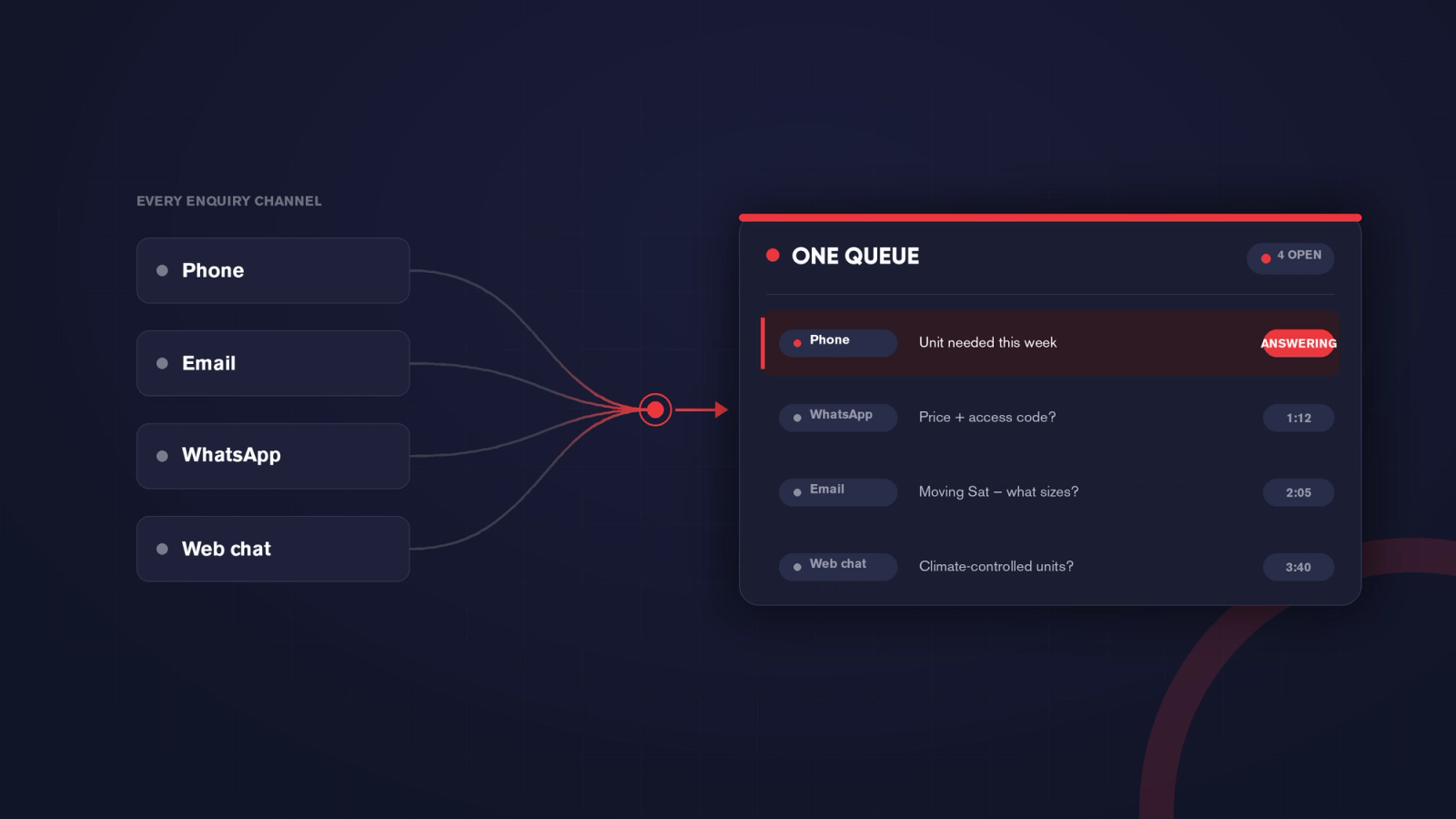
An omnichannel ticketing system - Zendesk and Freshdesk are the names you'll hear most - is built around a different unit of work: an inbound message that needs a fast, correct answer. For storage, that's the entire game.
What you actually get:
One queue. Phone, email, WhatsApp, web chat, Facebook - every enquiry lands in the same place, in order, with nothing falling between inboxes.
Response times you can measure. First-response time per channel, per agent, per hour of the day. You can't manage what your CRM never measured.
After-hours handling. Enquiries at 9pm get routed, auto-acknowledged, or answered by automation instead of waiting for Monday.
The full history attached to the person. When Mrs. Tanaka calls about her bill, the agent sees every conversation she's ever had with you - not a deal record from 2023.
Compare that to the CRM route. Want WhatsApp in HubSpot? That's a connector. Phone? Another integration. Web chat? A third. You end up doing systems-integration work just to see your own enquiries in one place - and after all that money, you still don't get a response-time report worth reading.
The fair version of the other side
Trade-offs, because there are some.
If you have a genuine B2B motion - commercial accounts, business storage contracts, portfolio or broker relationships - that IS pipeline work. Multi-month cycles, real stakeholders, real stages. If that's a meaningful share of your revenue, keep a CRM for that book of business. The argument here is about consumer storage enquiries, which for most operators is 95% of the volume.
And the honest objection I hear most: "we already paid for the CRM and the team knows it." I get it. But the team knowing it is mostly the team having learned workarounds, and the money is spent whether you stay or not. Storage operators typically use a fraction of what a CRM does, which also means the migration is smaller than it looks. The painful part isn't moving the data. It's admitting the original purchase was answering a question storage never asked.
The one number
If you do nothing else after reading this, pull one number this week: how long does an enquiry sit before someone answers it?
Not average handle time. Not lead volume. First response time, across every channel, including the WhatsApp messages that currently live on the manager's personal phone.
In a distress purchase with a same-week deadline, that number moves occupancy more than any marketing spend. Every hour an enquiry sits unanswered, the customer is calling your competitor - because they don't have time to wait for you, and they have no loyalty to a company they've never spoken to.
If you can't produce that number, that's the diagnosis. Your tooling can't see the thing your business runs on.
Where to start
Count yesterday's enquiries across every channel. If gathering that takes more than five minutes and two logins, you don't have a sales tool - you have a database where contact details go to sit.
Then price what it would take to get every channel into one queue with response-time reporting. For most operators that's weeks of configuration, not a year-long project, because ticketing systems do this out of the box. It's their whole reason for existing.
I don't recommend running consumer storage sales on a B2B CRM. Your customer isn't a deal to be nurtured. They're a person with a problem and a deadline. The operator who answers first wins - so buy the tool that's built to answer first.
← Back to the blog