As a start, can you please tell a little bit about yourself, your background, and your company?
Hi, my name is Nick Mooyman. I’ve built several tech startups over the past 20 years and I’m currently the CEO & Co-Founder of Astute Access.
Astute Access is a specialist in the enterprise smart locking world. We've developed a completely smart lock agnostic software platform (LockVue), which can integrate and control any number of Bluetooth-enabled locking devices via the admin web portal and user mobile apps (iOS & Android). We focus on four key verticals; energy, water, telecoms, and self-storage.
Before you came here, you co-founded iDefigo. Your background is in cameras. What were some challenges that you faced when you were transitioning from cameras to smart locks, and what were things that you could directly carry over?
With the previous business, we were an innovative company in the IoT and early cloud surveillance space with remote, solar powered cameras. I was the chief technical officer and one of the co-founders of that business. We spent a lot of time with utilities & critical infrastructure around the world and soon realized that mechanical locking was a completely broken system. That was the catalyst for what we're doing now with Astute Access. We are solving a significant problem by completely eliminating physical keys.
My previous business gave us a unique insight into the nature and size of the problem. Astute Access has gone about solving this using a combination of cloud software, mobile apps, and Bluetooth locking technology, to create a scalable and intuitive solution.
You developed an early prototype product for New Zealand Post. Most prototypes don't survive contact with real customers. Looking back at it, what do you think were the things that you got right that ensured the longevity of the product?
We focused on making the experience simple to ensure that users can open locks using ANY mobile phone. Technology solutions with a steep learning curve, all too often severely limits adoption at scale.
We kept it really simple from the start. And that has been the key to our success, our technology has been easy for people to understand, easy for people to get onboarded, and easy for people to use.
Speaking of technology, you started by developing the software and remained hardware-agnostic. Whereas companies in smart locks usually go the other way around. They first develop the physical proprietary lock, and then they built the software around it. Why do you feel that your approach was the right call? What were the trade-offs you had to make for this decision?
In the previous business, we were software-led. We did have hardware, but the core was a significant software platform. We wanted to replicate some of that success. The real vision here, which we've now turned into reality, was that the market was missing a unified platform to bring everything together. As you say, there are lots of vertical solutions where you've got a piece of hardware and then some software built around it. But customers have multiple locking needs. They want to be able to have one software platform that they can grow with.
They might start with a padlock solution, and then move into doors, gates, and many other assets within their environment. It's not practical for the customer to have multiple apps and multiple different software platforms from different vendors to manage all of these different devices. It just gets too hard and basically means that they don't ever adopt a solution at scale. So the vision was to have a platform that brings it all together from the very start: build a platform that can handle any of those smart locks in the same environment. Having achieved that, we now have the most flexible smart lock platform for operators, users, and customers to leverage.
One of your products, the KeyLokr, is very interesting because it gives operators a step-by-step transition to keyless. The product helps by tracking the physical credentials you already have. What are some learnings you had from selling this kind of hybrid product?
Yes, the KeyLokr is a useful entry point for some customers who are unable to make the leap to eliminate the use of keys. It provides them with an initial pathway from a mechanical to digital solution. Some of the learnings from that were, although the technology works and although it's a great solution for a lot of clients, there's still the human element. If the user who's been shared a lock goes to that key safe and doesn't put the physical key back, then the next person won't have access to it. So, the ultimate solution that we strongly advocate is going fully keyless. Most of our customers have a fully keyless solution from us now. That way, you're not restricted by whether the last user has physically put the key back, which, of course, we can't control. With a keyless solution, that problem completely goes away. There's no need for somebody to do something first before the next person can get access. In our opinion, the keyless approach is the future.
After being a software company first, you now also distribute your own locks. What was your thinking behind that strategic shift, and how do you still maintain your original identity?
We have been distributing smart locks from third-party vendors for a number of years. In that time, we've learned a lot about how they work and more importantly experiencing their various design deficiencies. We decided to put together our own hardware engineering team to design and manufacture our proprietary range of smart locks. We’ve been able to build out a very special ecosystem of smart locking hardware that seamlessly works with our market-leading LockVue software. The business is now vertically integrated, handling in-house hardware, firmware and software
Shifting focus a little bit. A lot of your customers are verticals like utilities or critical infrastructure. What are some of the problems that those bigger verticals have already solved that self-storage operators are not yet thinking about or addressing?
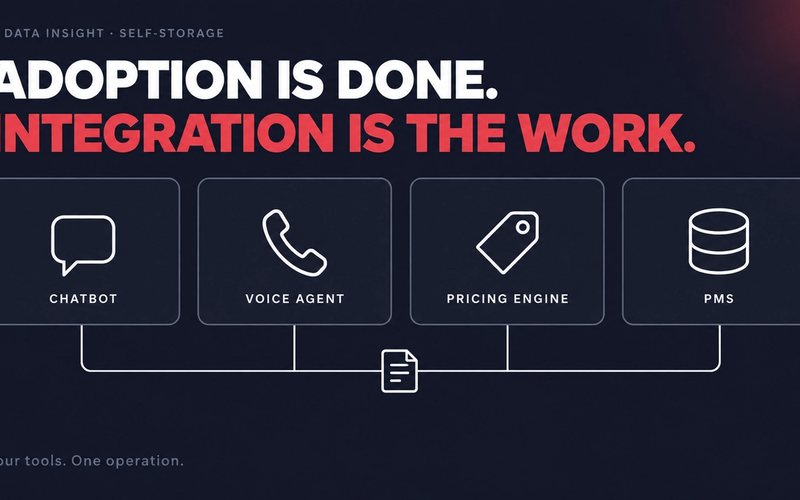
In the utility space, we have some very large-scale deployments. Typically when a customer is deploying 1,000+ smart locks, the integrations become very important. We're integrating into much larger software platforms, and they all run their own asset management software that manages the networks, maintenance cycles, etc. The learning from the utility space is that our software is super important. It's the glue in the middle that bridges the enterprise software platforms and the smart lock hardware in the field. These integrations enable full automation of user permissions & lock management.
In the earlier days in the self-storage market, we noticed operators struggling with a myriad of manual processes, making it difficult to scale (particularly if the goal is a network of unmanned sites). Fast forward to today, there’s a lot more sophistication in the self-storage market, where everybody's moving to powerful software platforms to manage their portfolio, and so we’ve seen a significant demand around integrating LockVue into a number of these platforms to automate the full user experience.
The key lesson for operators is to put a focus into automating as much of the processes as possible within their portfolio – software is the key enabler in achieving this goal and in our case in combination with bluetooth-enabled locking hardware.
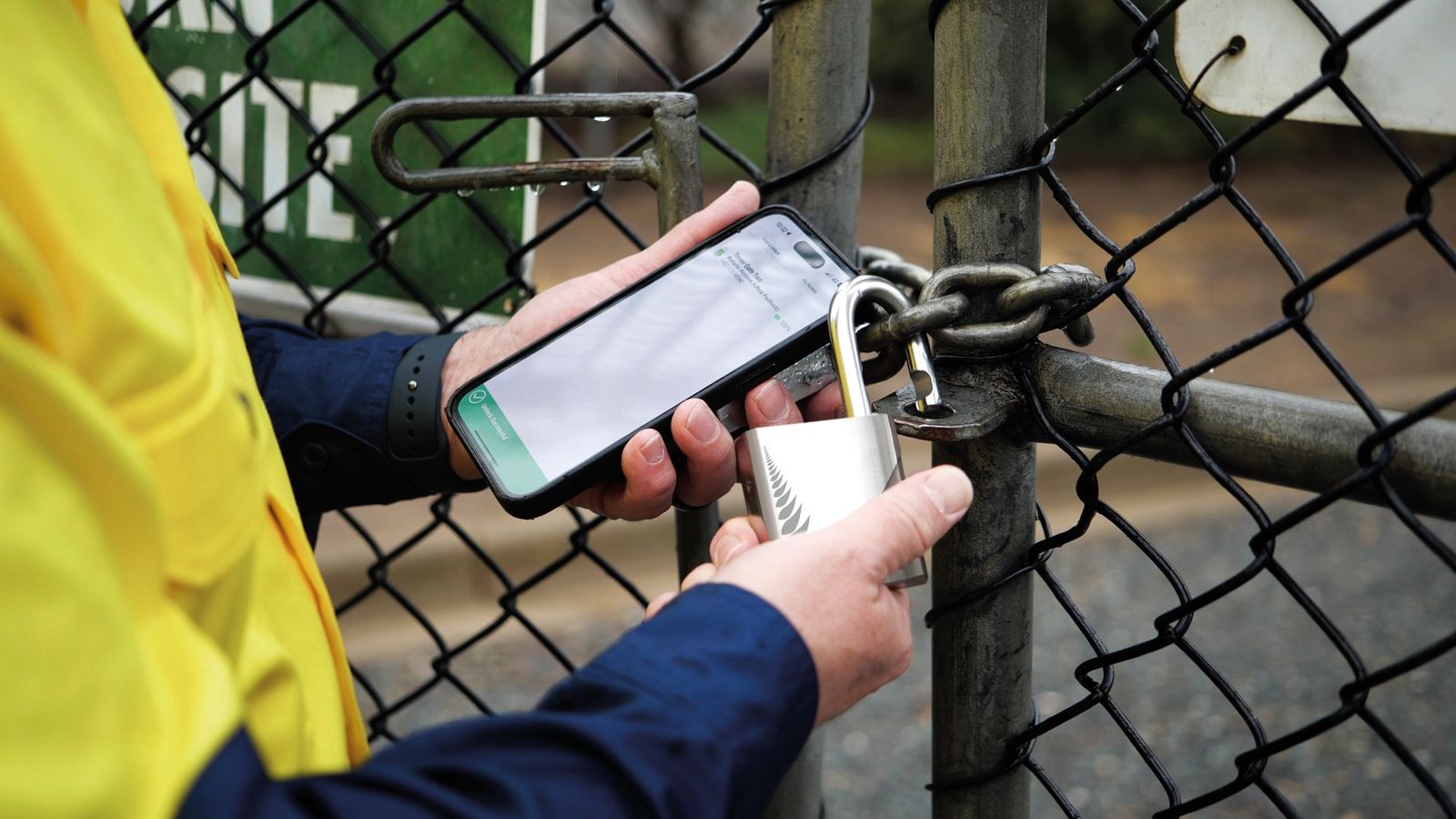
Contractor access is the big problem in utilities: third parties needing temporary access without becoming a permission-management nightmare. Self-storage has a similar problem with movers, cleaners, etc. How do you set up a system to manage this easily and practically?
What we're doing now is we're linking into whatever locking points need to be digitized throughout self-storage. Whether it's the electric gate that controls access to the perimeter, right through to containerized locking on the external aspect of these sites, and then also the internal swing doors and roller doors, we handle the whole end-to-end solution.
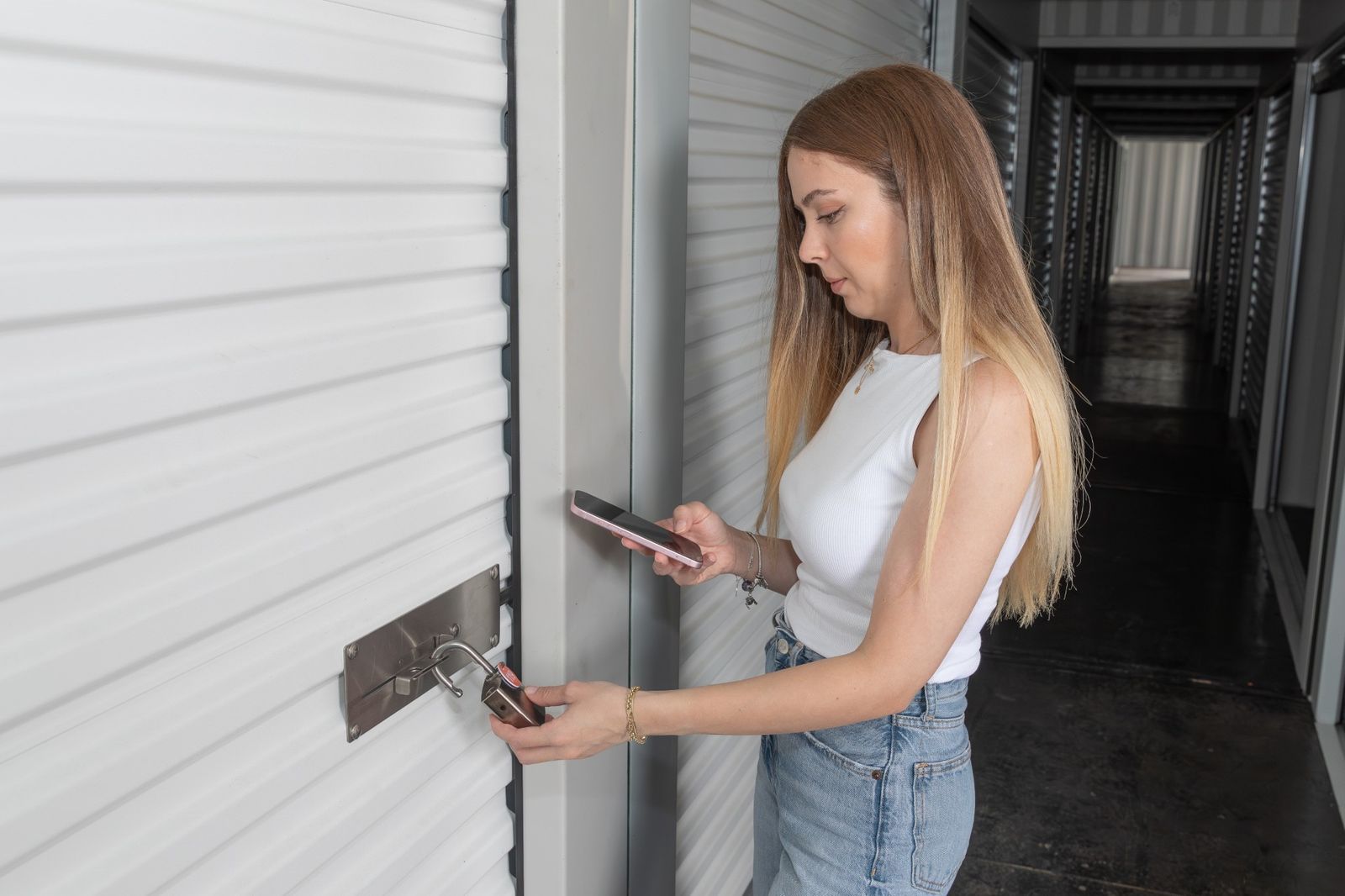
The renters of the units get digital access from the very start. That usually flows through the self-storage software, and they get digital keys as part of the onboarding process. They have access to their units through our mobile app. Our software is very flexible for the user, so they can also be given a sub-admin access level, which means they can share access with their friends, family, and staff. If they're running business operations from the self-storage units, they can give or restrict access as they need.
Then, from an operator perspective, you've got all of that workflow automated for your tenants, but then you can give manual access at any time to cleaners and other staff, and any external third-party contractors who need access to do work on site as well.
So it's a really intuitive and flexible platform. We provide an audit trail of all activity that happens throughout the site, so you can tell exactly who opened the lock, along with specific time & date and we even capture specific phone make & model and GPS co-ordinates. All of that is captured & viewable from within the LockVue web portal.
You are a New Zealand-headquartered company, with offices in Sydney and Melbourne, too. You are also active in markets like Germany, the UK, and Singapore. Can you share a bit about the logic behind selecting those markets and whether there would be something that you would do differently about the rollout?
We naturally started in our local markets of New Zealand and Australia. We have a large network of customers that we serve in both countries. Our journey into the European market is more recent. We've made a lot of progress in the UK & Germany over the past two years and we have several large customers who have completed significant lock rollouts. The UK is not too dissimilar to New Zealand in terms of the people and the culture, so we found that the transition into the UK has been relatively straightforward. The problems within the utility sector and self-storage are almost identical throughout the world. Within Germany, there are a few extra challenges with the language barrier, but we’re seeing a lot of growth and a huge number of opportunities. In the self-storage space, the UK is the fastest-growing country, and the fastest-growing subset within self-storage is the containerized part of self-storage. The UK is leading the world right now in this space.
We're seeing this trend extend into Germany and the wider European market, as well. So, we expect to see similar automated unmanned sites within containerized self-storage, and that's really where we play and where we’re leading the market with our unique combination of smart locking hardware & software. It makes no difference if the containers are in New Zealand or Germany. The technology works seamlessly across geographic boundaries.
One thing we have learned is that having local partners is really important. In markets that we don't understand as well, for example Germany and Singapore. These are markets where we have great local partners who have deep experience, not only speaking the language and understanding the culture, but also understanding how business is done. We wouldn't be in the Singaporean market if we didn't have a local partner with deep ties into the utility sector and a very deep understanding of how to transact in those markets. So for us, it's about utilizing those relationships rather than trying to go direct and potentially burn a lot of money in the process.
Your Marketing material mentions Bluetooth offline functionality. What exactly does it mean in practice? Say a tenant arrives at the facility and there is no signal. What are the recovery steps?
We have two modes of operation. One is online mode, which is the default mode. That is where a user simply opens their LockVue app, and those permissions are synchronized in real time. They can then choose what lock they want to open. It's a seamless process happening very fast, talking to the server and sending encrypted keys down to the mobile app. The phone is the proxy between the cloud and the lock. That works well for online use where you've got access to cellular coverage or WiFi.
When you're in an area where you're offline, or the mobile service provider may be different from what the local tower is, we have an offline mode. Offline mode enables your phone to securely cache the keys within the app and still make a secure local Bluetooth connection from the mobile app to the lock. You can still open the lock, and that unlocking data is stored on your phone and uploaded to the cloud when you next connect to the internet.
That all works well for users, and it's really an education thing. It's similar to going to a remote site with mechanical locks and checking you have the physical keys before you drive to the site and leave coverage. In this case, you're ensuring the user has opened the app when they're in a coverage area and checking that those locks are sitting in their access list within the app. It takes seconds to synchronize; all you have to do is open the app. If you haven't done that, you just need to drive to the fringe of coverage, sync up, and then go back.
The system works well, and there's not much the operator has to do other than initially provide the education to their users.
Assume you're talking to a small storage operator, saying that they plan to open 10 new facilities in the next two years, and the technology decisions they're making right now will be affecting those new facilities for the next 10 to 15 years. Which aspect of the many different technology decisions that they have to make would you push them to think the most thoroughly about?
I think one of the very important decisions is the self-storage management software. Having the right software platform is critical, and it allows you to scale rapidly. Obviously, there are a few different players now that offer advanced, fully cloud-based solutions. So that is a very key decision. I'm biased when I say that locking is also important, but I think digital locking is critical, especially if you're trying to go completely unmanned or provide a seamless tenant experience, along with updating the way that overlocking is done in the industry.
Overlocking has historically been a very manual process, with people having to go out with a physical lock and install it alongside the tenant’s lock. There's a whole process around that, and at scale, across multiple geographically dispersed sites, that process is very expensive and time-consuming. When you digitize this process, you can click a button in the software and effectively achieve that digitally without having to drive large distances between sites.
Operators that use a powerful self-storage management software, which is tightly integrated with a flexible smart locking solution is the key enabler around rapid scaling. Further, a lot of operators we speak to aren't interested in just having one site. They're looking to expand to multiple sites, particularly in the containerized market. Due to this desire to continually expand, technology is the way to do it without having a huge payroll of staff trying to manage these sites.
Last question, a little sneak peek. What is the plan for Astute Access for the near future?
We've been very active globally in the utility space for a number of years. But we see the self-storage space as one of the fastest-growing and most dynamic verticals now, particularly on the external locking of containers. So that's really an area that we are putting a lot of focus into. We have a number of exciting R&D projects for new locking technology that fits various aspects of self-storage where we see a gap that no one is addressing properly. We have a great padlock solution, a door lock solution, and an electric gate solution. But we also see other areas within self-storage that could be digitized. We've got a few projects underway behind the scenes involving new products that we'll be looking to launch in the next 12 to 24 months. So, watch this space!
← Back to the blog