
Unwired Logic: Let’s start with a quick introduction. Please tell us a little about yourself and how you came to work in self-storage.
Doug Perrins: I’ve been involved in self-storage for 38 years now. I started running the family business back in Australia in the late 1980s. The original idea actually came from my sister, who was living in America at the time. She said to Dad, “There’s this thing called mini-storage. You should do this.”
Dad liked the idea. He bought an old strawberry farm in Brisbane and converted it into a drive-up self-storage business, which thrived. I ran that for about 10 years before I was approached to come over to the UK to help set up Big Yellow.
I did that for five years, then spent some time consulting around Europe. After that, I set up Ready Steady Store with a private investor. We rolled out seven stores in our first 14 months, so that was a bit of a ride.
Then I went on what was supposed to be a sabbatical, which somehow ended up with me in Bahrain, in the Middle East, setting up an 18,000-square-metre lettable self-storage facility on a tiny island. It was nuts, but very interesting.
Before and since then, I’ve worked across Europe, Asia, the Middle East, Australia and, of course, the UK. I think I’ve chalked up about 17 countries now.
So, it’s been varied. I’ve seen a lot of trends and heard a lot of different perspectives simply by talking to customers, investors and suppliers. You meet an incredibly varied group of people in this industry. No two are ever the same.
It’s been a great journey so far, and there’s still more to come. We’ll see what the future holds.
Unwired Logic: You’ve been in the industry for close to 38 years and have worked in different regions around the world. What were the differences between those regions when you started, and what has changed since then?
Doug Perrins: Firstly, even the name has changed.
When we started, it was called “mini-storage”. In our case, it was Lock-Up Mini Storage, because that was what they called it in America. After a while, the industry dropped “mini” and it became “self-storage”. Then it became The Lock-Up Self-Storage. Now it seems to be evolving again, with quite a few companies dropping “self-storage” altogether and simply calling it “storage”.
Unwired Logic: Why do you think that is?
Doug Perrins: I don’t know. Maybe it’s cheaper to have fewer letters!
But it’s funny how the name of the product has changed when, fundamentally, what we sell hasn’t. We sell space. It’s still a room with a door and a lock on it. That hasn’t changed.
What has changed enormously is how scientific the industry has become.
In my father’s day, back in the 1980s, Dad basically did the numbers on the back of a cigarette packet, literally. The numbers looked all right, so he bought the block of land, appointed a contractor to build it and then told the bank he needed some money to finish the job.
The bank had never even heard of mini-storage. Luckily for Dad, it was his bank manager of about 40 years, so he backed him.
These days, there are pages and pages of reports and spreadsheets and, in my opinion, sometimes too much analysis.
It’s fundamentally a pretty simple product, and I don’t think we should complicate it unnecessarily. At the end of the day, we sell space.
Unwired Logic: In terms of the users themselves, has there been much change over the years?
Doug Perrins: No. The fundamental customer need hasn’t changed.
People still want somewhere to store their household belongings or things for their business.
What has changed is the customer’s attitude and, particularly, the speed at which they expect things to happen.
In the old days there was no internet, so you relied heavily on your sales skills to get somebody down to the facility. That was a skill in itself because self-storage wasn’t necessarily easy to explain, let alone make it sound exciting. You wanted to get them through the door so you could show them the product.
We were a family business, so that was part of our selling point. A customer would walk through the door and there would be Mum, Dad and me. We relied heavily on those personal skills.
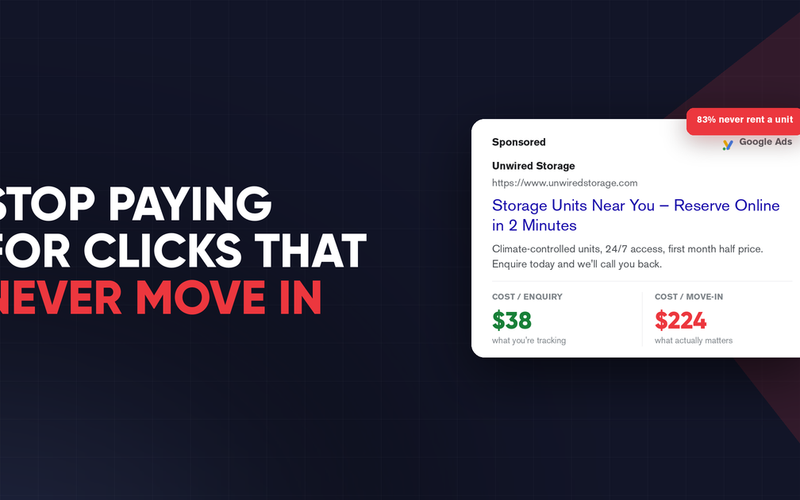
Nowadays, it’s online marketing, digital advertising, pay-per-click and everything that goes with it. It has become much more sophisticated because the way the customer wants to buy has changed.
They want it now.
People don't want to go into a storage facility, sit at a desk for 20 minutes and fill out paperwork. They don't have time for that anymore. That’s why we're seeing more operators move towards digital and staffless operations.
Digital access control, online bookings and automated processes are becoming prominent. You wouldn’t have imagined some of this 10 or 15 years ago.
But ultimately, it’s what the customer wants. People go online and have their groceries delivered. They book a plane ticket or a hotel room, or buy a pair of shoes with a couple of clicks. Our self-storage customers are increasingly tech-focused and tech-savvy, so why should self-storage be any different?
You go onto the website, click, and you’ve got your storage room.
Unwired Logic: Following on from that, has there been any particular trend or technology that you regret adopting, or perhaps regret not adopting quickly enough? Has that changed how you approach new technologies in self-storage?
Doug Perrins: Not particularly. In the early days, we had a completely manual system for managing customer accounts. These days, there are so many operating platforms available.
When I first came over to the UK, I was surprised by how clever some of the operating systems were, but I also thought they were over-engineered.
We don’t need 40 reports. I want to know where the customer came from. I want to know some basic demographic information. I particularly want to know where they live. But I don't necessarily need endless amounts of detail.
Some of those early operating platforms were a bit like a mobile phone: you only use 70% of the functionality, but you're paying for 100% of it.
There are some newer products coming into the market now that have simplified things considerably, and I think that’s very positive.
I certainly don’t regret moving into the digital age. You have to move with the times.
The key is that it should never be about what you, as an investor or operator, want to do, or what you think is right. It should be about how the customer wants to operate.
You follow their lead.
A lot of people don't think like that. They don't think enough about actual customer behaviour. Sometimes very small things make a difference. For example, don't put roller shutters internally, they collect dust, break fingernails.
All these little things add up.
Again, it’s a simple product. Keep it simple. What does the customer want? They want to go online, click and get a storage room.
Okay. Then that’s what we'll give them.
There are some very good examples out there. Swift Storage in Brisbane is one. I’m slightly biased, I know, but you can park outside the gate and become a customer in less than seven minutes.
I think we can learn a lot from that.
Unwired Logic: Would you rather take over the management of an established storage business or start one yourself? And why?
Doug Perrins: I've done both.
There’s something very rewarding about building a customer base from scratch. I also think any good manager should really know their customers.
When I was running the business in Brisbane, I knew virtually every customer. I knew what size room they were in and where they were in the facility.
When we were full, I was always looking for more rooms. I didn't want a waiting list because I didn't want potential customers going somewhere else.
So, if somebody came in needing 100 square feet, for example, and I knew Bob Smith was only using half of his 100-square-foot room, I might say to Bob, “Look, I've got a 50-square-foot room you could move into. We'll move everything for you.”
Why? Because I wanted that 100-square-foot room for the new customer.
It's about knowing your business and knowing your customers. Also, and very importantly, how much is a customer worth to your business.
If the industry data tells you the average customer is going to stay for nine months, that's their value to you as a business. Then the question becomes: what can we do to encourage them to stay longer?
Building that customer base from the beginning is extremely rewarding.
Taking over an existing business is different because you've got to learn much more about the existing customers and operation. But turning around a business that isn't performing particularly well is also rewarding because you can see the positive results of the changes you've made.
Both have their merits. If I had to choose, though, I'd probably start from scratch.
Unwired Logic: If you had complete freedom to choose anywhere in the world, which would be your favourite region to start a new self-storage business?
Doug Perrins: Oh, gee. You're asking an Australian who's living in the UK and is always pining to go home!
I've been to some really interesting countries looking at self-storage opportunities.
I've done a lot of work in the Middle East, which is still really underserved. In many places, self-storage simply hasn't been done properly there yet.
If I could figure out how to make a self-storage facility work on a tropical island in the Pacific, I probably wouldn't mind doing that one! I did know someone who had one in the Caribbean.
I don't think I'd necessarily want to go into another huge major city. I like emerging markets.
Anywhere with a low level of self-storage supply, or virtually none at all, is interesting to me. That's a challenge. With all the experience I've accumulated, I'd like to think I could go into somewhere like that, give it a go and make it work.
I did some work in China, which was fascinating.
I also love Europe. It's an incredibly interesting market and is still underserved. There are some fantastic opportunities across Europe.
So, if there’s one common theme, it’s emerging markets. I like the challenge of an emerging market.
Unwired Logic: When you're opening a new self-storage location, there are obviously many decisions to make. Which ones are crucial to get right from the start, and which ones can be fixed or added later?
Doug Perrins: You've got to get the location right. That's probably number one.
I keep harking back to the beginning, but it was actually Mum who found that strawberry field just outside Brisbane. Sometimes you do get lucky.
When we set up Ready Steady Store, we found a site in Eastleigh, near Southampton, which I still think is one of the best self-storage locations in the UK. It became an amazing store.
You need to make sure the location can support the size of facility you're planning to build.
Can you get to your ultimate mature occupancy, whether that's 85%, 90% or 95% quickly enough? Can you sustain it? Will the local community and demographic support future rate increases?
Those are critical questions.
Otherwise, you can grow steadily and then suddenly find yourself stuck in the mud at 50%, 60% or 70% occupancy. Digging yourself out of that and getting to your mature occupancy level can be very hard work.
So, you've got to get the location right. It's pretty difficult to undo that mistake later.
Something else people don't talk about enough is the importance of your name and your brand.
That's particularly relevant now because customers want everything immediately. You've got to have something memorable and appealing.
The self-storage demographic isn't just retirees. They are certainly part of the customer base, but increasingly our customers are digitally savvy. I think your colour scheme, your name and the overall presentation of your brand are extremely important.
I've sat through plenty of conferences where people talk about all the important elements of setting up a self-storage business, but I can't remember many people talking seriously about the name and brand.
I'd spend money getting good branding people involved, unless you've come up with something exceptional yourself and properly workshopped it.
Marketing has changed enormously as well. It's predominantly digital now, and there are some very good specialist companies out there that can do it for you.
And don't take shortcuts. Eventually, you'll get found out.
By shortcuts, I mean don't build cheap.
I'm a bit of a self-storage snob because I grew up around high-quality businesses—the family operation, Big Yellow and Ready Steady Store.
Having said that, I've seen some extremely impressive shipping-container operations. As much as I personally dislike shipping containers as a self-storage product, I've seen some very good businesses built around them.
Whatever product you're offering, get the quality right.
Don't short-change the customer. Don't try to rip them off. Don't think you're being clever by putting somebody into a larger unit than they actually need just so they'll pay more.
Get the unit sizing right and do the right thing by the customer.
Unwired Logic: To wrap up, what's your outlook for the future of self-storage as an industry, in the UK, Europe and globally? Is there anything coming that particularly excites you, or anything that concerns you?
Doug Perrins: There is loads of growth left in this industry globally. I don't think we're anywhere near mature yet.
There are obviously some pockets—parts of London, for example—where I probably wouldn't look to develop another facility because there is already so much supply.
But across the wider market, there are still enormous opportunities.
A good-sized self-storage facility should generally be approaching maturity by years four or five. In some established markets, operators are full and looking for new ways to grow, so that's encouraging innovation.
There is also some very clever technology coming into the industry that I think will be genuinely useful.
There are other areas where I'm not completely convinced yet. AI in self-storage operations, for example.
I'm not talking about AI in marketing; I can absolutely see its role there. I'm talking specifically about the day-to-day operation.
Some companies promoting AI are claiming it will increase sales by 15% or 20%. My question is: how?
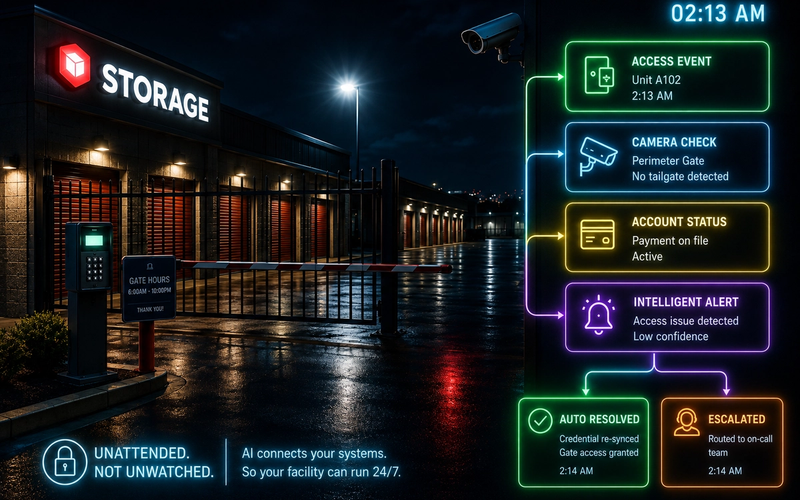
They'll say, “Well, when you're not there at night, the AI bot can take the enquiry.”
In all the years I've been in this game, I could probably count on one hand the number of self-storage units I've sold at two o'clock in the morning!
AI certainly has a place, and I think it has enormous potential in areas such as marketing, but I'm not yet convinced about all the claims being made for operational AI.
I keep coming back to the same point: self-storage is a very, very simple product.
Don't overcomplicate it.
Because if we make it too complicated for customers, they'll find an easier, lower-friction way to store their belongings somewhere else.
We are, however, becoming much cleverer about finding locations and diversifying sites.
There are developments in London now combining self-storage and residential within the same building. Others incorporate retail. Mixed-use developments can work very well.
I remember one of the Big Yellow stores had a Burger King down one side and self-storage on the other. They were separate operations, but it worked. It made the yard a bit messy with all the rubbish, but it certainly brought footfall!
Security is one area that concerns me slightly, particularly as technology becomes more sophisticated.
At the same time, the technology and security companies serving our industry are responding. Off-site monitoring, for example, has become very good, and there are some excellent companies keeping an eye on facilities remotely.
You're never completely going to stop the customer who wants to store drugs or stolen goods. They'll probably always be around, and they'll probably still pay on time!
The bigger issue is break-ins and unauthorised entry.
Fire safety is another growing concern. I once spoke to a fireman in Manchester who told me that batteries and electrical fires were becoming a significant problem.
As an industry, we need to be proactive about finding solutions that prevent these incidents and protect our facilities. Security and safety have to keep evolving alongside the risks.
But overall, I'm extremely positive.
The future of self-storage is good. There's plenty of growth still to come, and the future is certainly bright.
Common questions
The product hasn't changed. It's still a room with a door and a lock on it. What changed is how the business is run and how customers buy. Deals once modelled on the back of a cigarette packet now come with pages of reports, and customers who once had to be sold in person expect to book a unit online in a few clicks.
Speed. Customers won't sit at a desk for 20 minutes filling out paperwork. They book flights, hotel rooms and groceries online, so they expect the same from storage: go to the website, click, get a room. That expectation is what's pushing operators toward digital access control, online bookings and staffless sites.
Location, first. The site has to support the size of facility planned, reach mature occupancy quickly and sustain future rate increases. Get it wrong and you can stall at 60% occupancy for years, and it's a hard mistake to undo. Name and brand come next, and they are what operators most often under-invest in.
Doug Perrins sees a clear role for AI in marketing and is less convinced about day-to-day operations. On vendor claims of 15% to 20% sales increases from after-hours AI enquiry handling, his answer is that in 38 years he could count on one hand the number of units he sold at two in the morning.
Emerging ones. Perrins points to the Middle East, where self-storage is still underserved, and to Europe, which he considers an interesting market with real opportunity left. He'd avoid saturated pockets such as parts of London.