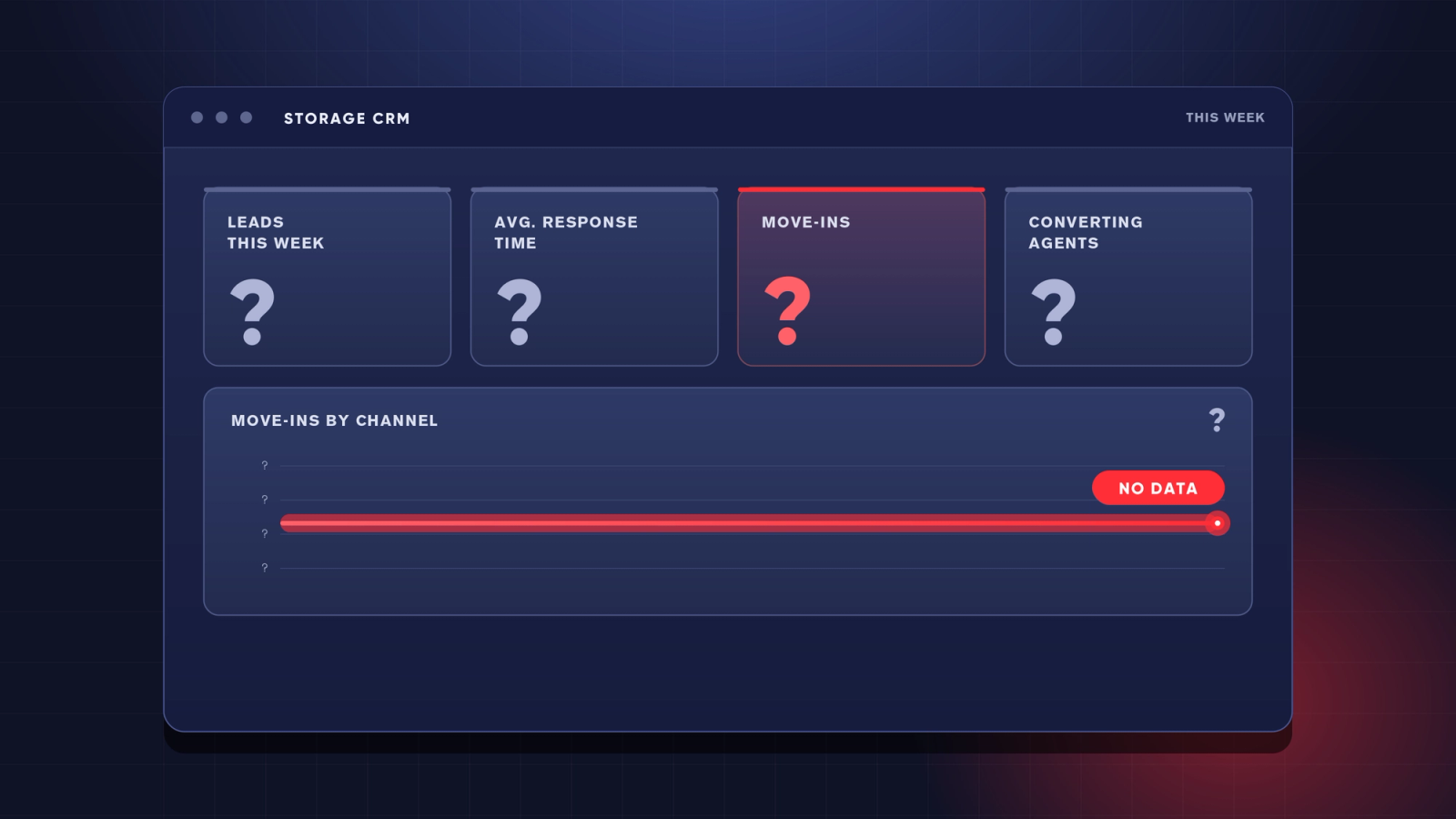
A CRM won't fix a sales process you haven't designed. It just shows you, in higher resolution, that you never designed one.
I've watched operators spend months choosing a CRM, migrating data, training staff, and then land somewhere worse than where they started. Not because the software was bad. Because the software did exactly what it was told, and nobody had decided what to tell it. The project failed before anyone signed a contract. It failed the moment "get a CRM" became the goal instead of "decide how we actually sell."
What operators think they're buying
The pitch is control. Lead tracking. Reporting. Automated follow-up. Visibility into what converts. Every operator I talk to wants those things, and every CRM demo promises them.
Here's the part the demo skips. A CRM doesn't create an operating model. It reflects the one you already have. If leads are handled differently by every person on every shift, the CRM will faithfully record that chaos. You'll get dashboards of your own inconsistency, delivered on time, beautifully formatted.
Control isn't a feature you buy. It's a set of decisions you make before you buy anything.
The questions that need answers first
Before you look at a single vendor, your operation should be able to answer these. Not in theory. On paper, the same way on Tuesday as on Saturday, whoever is working.
- Who owns a lead the moment it comes in? One name, not "whoever's around."
- What's the maximum time a new inquiry can sit before someone responds?
- What happens when a lead doesn't answer? Not "we try again sometime." The exact next step, and when.
- What's the follow-up cadence, and when does a lead get marked dead?
- Who checks abandoned quotes and missed calls, and how often?
- When does a prospect move from sales to service, and who owns them after?
If those answers don't exist, no CRM will invent them for you. It will just give your confusion a database.
Self-storage is a distress purchase
Remember what you're actually selling into. Most people don't shop for storage the way they shop for a car. They're moving, downsizing, dealing with a death in the family, or their garage finally overflowed. They want the problem gone. Today.
That changes what wins. Clarity, speed, and confidence win. Whoever answers first, sounds like they know their facility, and makes the next step obvious usually gets the lease. Storable's data puts numbers on this: follow up within ten minutes and you raise the odds of a move-in by roughly 25%. Slow or generic follow-up doesn't just lose a sale. It burns money you already spent to get that person to call.
You paid for the lead through Google, through your signage, through your reputation. A messy follow-up throws that spend away at the last step.
Mistake 1: Treating it as a software-selection project
This is the big one, and it's where most of the failure lives.
The project gets framed as "which CRM should we buy," so the team compares features, sits through demos, argues about price, and picks a winner. Then they configure the winning tool around how the business runs today, which means around inconsistent habits nobody wrote down. What you end up with is an expensive, digital version of the same mess. Now it has a login.
The fix is to design the operating model first, then buy the tool that fits it. Map the ideal journey from inquiry to move-in. Decide what's automated and what stays human. Define the missed-call workflow, the follow-up cadence, the exact handoff from sales to service, and the weekly review where a manager actually looks at the numbers. Do that work, and the software choice gets easy, because now you know what you need it to do.
Mistake 2: Confusing your PMS with a CRM
"We already track leads. There's a tab for it in our management system." I hear this a lot, and it's where a lot of operators quietly go wrong.
A property management system runs your facility. Units, tenants, billing, occupancy, gate access. That's its job and it should do it well. A leads tab bolted onto a PMS is not a sales process. It's a place to type names. It doesn't enforce a response time, it doesn't chase a cold lead, it doesn't tell you which agent converts and which one lets inquiries rot.
The dangerous part is the false sense of control. A weak CRM module inside a PMS can be worse than having nothing, because you believe you're covered. You're measuring occupancy while your top-of-funnel leaks, and the tool that's supposed to catch that is the one telling you everything's fine.
Mistake 3: Adding AI before the basics work
Every operator wants to put AI on top now. Voice agents, chatbots, automated follow-up. I get it, and the tools are genuinely capable.
But AI amplifies whatever it sits on. Point it at unclear sales stages, weak FAQs, messy pricing, and unreliable data, and it will scale the confusion, faster and with more confidence than any human ever could. A voice agent working from bad availability data books units you can't deliver. A chatbot quoting from a stale pricing table argues with your counter staff. You've automated the mistake.
Fix the operating model, clean the data, define the stages. Then the AI has something real to work with, and it earns its keep instead of magnifying the gaps.
The architecture that actually works
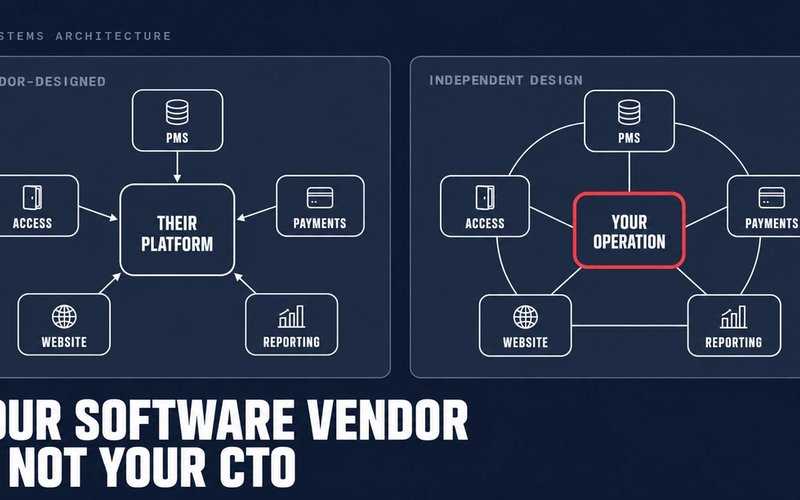
The systems aren't the hard part. The design is. When it works, each system has one defined job and they share a single, honest picture of the customer.
- PMS runs the facility and holds the record of truth for units and tenants.
- CRM / sales layer owns inquiries and the pipeline, from first touch to signed lease.
- CX platform handles support, messaging, and tickets after the sale.
- Phone system covers call routing, recordings, and missed-call visibility so no call disappears.
- Reporting ties it all together into numbers a manager can act on.
Which brand fills each box matters far less than the fact that each box has an owner and a job. Zendesk, Storeganise, Aircall, Respond.io, Zoho Analytics: fine tools, all of them. But the tool is the last decision, not the first. Buy the architecture, not the logo.
The test: can you answer these seven questions?
Here's how you know whether your CRM is actually working, regardless of what you paid for it. Ask your operation for these numbers. If you can't get them quickly and reliably, the implementation isn't finished, no matter what status the project is marked.
- How many leads did we get last week?
- Where did they come from?
- How fast did we respond, on average?
- How many turned into move-ins?
- How many did we lose, and why?
- Which agents convert, and which don't?
- Which channels actually produce paying tenants?
A CRM that can't answer those isn't a CRM. It's a contact list with a subscription.
The real lesson is simpler than the software makes it look. A CRM is a management rhythm, not a system you install. The operators who win decided how sales, service, follow-up, and accountability work first, and then found the tools to hold that discipline in place. Get the rhythm right and almost any decent software will do. Skip it, and the best software on the market will just document the drift.
← Back to the blog