If move-ins are down and your first move is to pull the phone records and match them against your customer list, you don't have a reporting problem. You have a counting problem, and it started long before the month you're now investigating.
I've spoken to several operators over the past year who don't track leads in any real sense. It's far more common than the industry admits. When the numbers drop, the response is to go back through call logs looking for people who made contact and never got recorded anywhere. It's archaeology. Reconstructing, weeks later, something the systems captured in real time and nobody opened.
None of them are lazy and none of them are careless. They were handed dashboards and told that was insight. A dashboard answers the questions you already knew to ask. Everything expensive is in the questions you didn't.
Whoever defines a lead controls the conversion rate
I've written before about what a lead actually is: first unique contact from a prospect with storage intent, with a timer on it, because storage is event-driven and the same person coming back after 90 days is a new lead. That's the definition. What I left out is who gets to decide.
In most operations, the person defining a lead is the person measured on converting them.
Nobody frames it that way. It shows up as a series of small, defensible judgement calls. That one was just a price shopper. That one was the same guy who called in March. That one wasn't serious. Each call is arguable on its own. The aggregate is a conversion rate that only ever moves in one direction.
This is almost never deliberate. Give a team a number to hit and no written definition of what feeds it, and the definition will quietly drift toward whatever makes the number work. That isn't a character flaw. It's what happens when a definition is left to the person with a stake in the answer.
There's a quick test. Ask two people in your business to define a lead, separately, in writing. If the answers differ, your conversion rate is an opinion.
The number that looks best means the least
Reservations are where this does the most damage, because reservation conversion is the metric that gets reported upward.
If you offer free cancellation, expect somewhere between 20% and 40% of reservations to cancel. That means a reservation isn't a win. It's a more qualified lead. Useful, worth watching, but it has not paid you anything and a meaningful share of it never will.
The only conversion that matters is lead to move-in, or lead to paying subscription. If you take payment up front, the rules change and sign-up becomes the real line. Either way, pick the moment money actually changes hands and measure to that.
The reason to be blunt about this is that reservation conversion is genuinely distracting. It looks like performance. It moves when you run a promotion. And a team optimising it will happily trade real move-ins for a better-looking number.
What's actually sitting in there
Once the definitions hold, the same two things turn up nearly every time.
Missed calls. Thirty to forty percent is normal, and almost nobody knows their own figure. We worked with one operator missing 38% of inbound calls, ten agents on the phones, working hard, and four in ten calls still went nowhere. The data didn't exist until we built it. Effort wasn't the problem.
Hours are most of it. Open seven days, eight to eight, and maybe 10% to 20% of enquiries land outside your window. Monday to Friday, nine to five, and you're looking at 30% to 40%. Storage decisions get made on Saturday afternoon after the argument about the garage, not on Tuesday at 11am. There's more detail on measuring that specific leak here.
Orphans. This one gets no attention at all. Tasks and activities created against a lead, assigned to someone, and never actioned. Not rejected, not lost, not disqualified. Just sitting there. In a mid-sized operation it is routinely hundreds, sometimes thousands.
Every one of those was paid for. You spent money on the ad, the click, the phone number, the person who picked up. Then the follow-up got created and nobody ever opened it. There is no line in any P&L for this, which is exactly why it survives.
To be clear, I'm not arguing every lead deserves a human chasing it. You need qualification, and you need automated follow-up doing the routine work. What you can't do is discard leads without knowing you're discarding them.
"It was just noise"
Here is the pattern I see most often, and it costs more than the orphans.
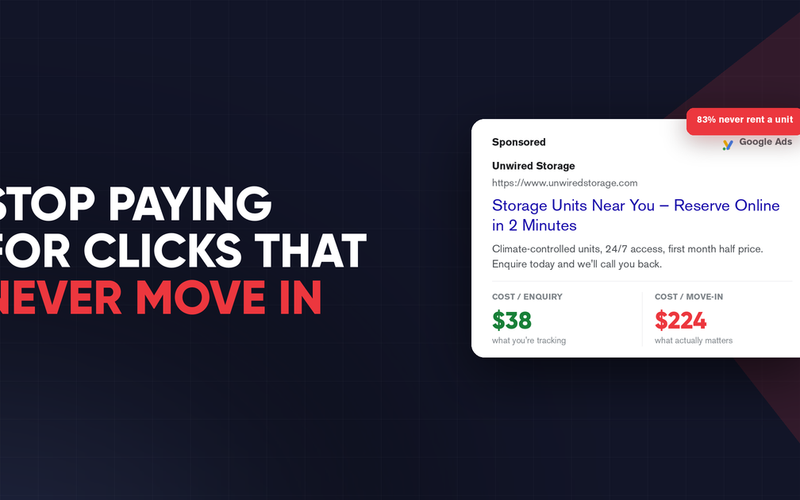
An operator looks at a channel delivering volume and few move-ins, decides it's junk traffic, and cuts it. It was just noise. Budget moves elsewhere. Done.
Sometimes that's right. Usually nobody checked.
Volume and effectiveness are two different diagnoses, and they have two different fixes. A channel delivering plenty of enquiries that don't convert might be attracting the wrong people. It might also be arriving at a time nobody answers, landing in an inbox with no owner, or routing to someone who handles it badly. Same symptom. Completely different problem. One says stop paying. The other says you're already paying and throwing away what you bought.
Cutting is the cheap answer because it requires nothing. Dissecting requires you to open the records and read them one by one, which is slow and unglamorous and is the whole job.
Most operators already know
The part vendors get wrong is assuming this is ignorance. It usually isn't. Ask an operator whether they're missing calls at night and most will tell you yes, probably.
What they don't have is a move. Staffing 24/7 for a handful of overnight enquiries is hard to justify, and they're right to be sceptical about it. An after-hours answering service that can only take a message isn't a channel, it's a callback list. So the leak gets tolerated, because every fix on the table looks worse than the problem.
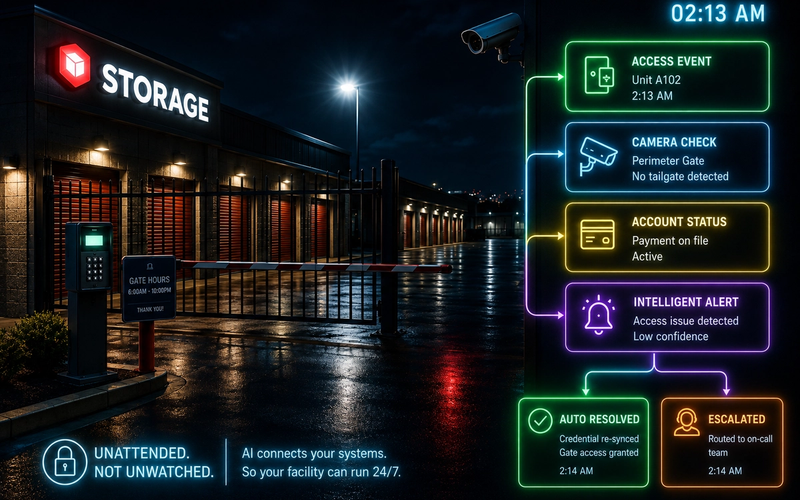
That calculation has changed. Routine enquiries (price, sizes, hours, access) can now be handled automatically at 2am, and properly, which leaves your people on the ones that convert because a human handled them well. That's genuinely new, and it's why this is worth reopening if you looked at it two years ago and passed.
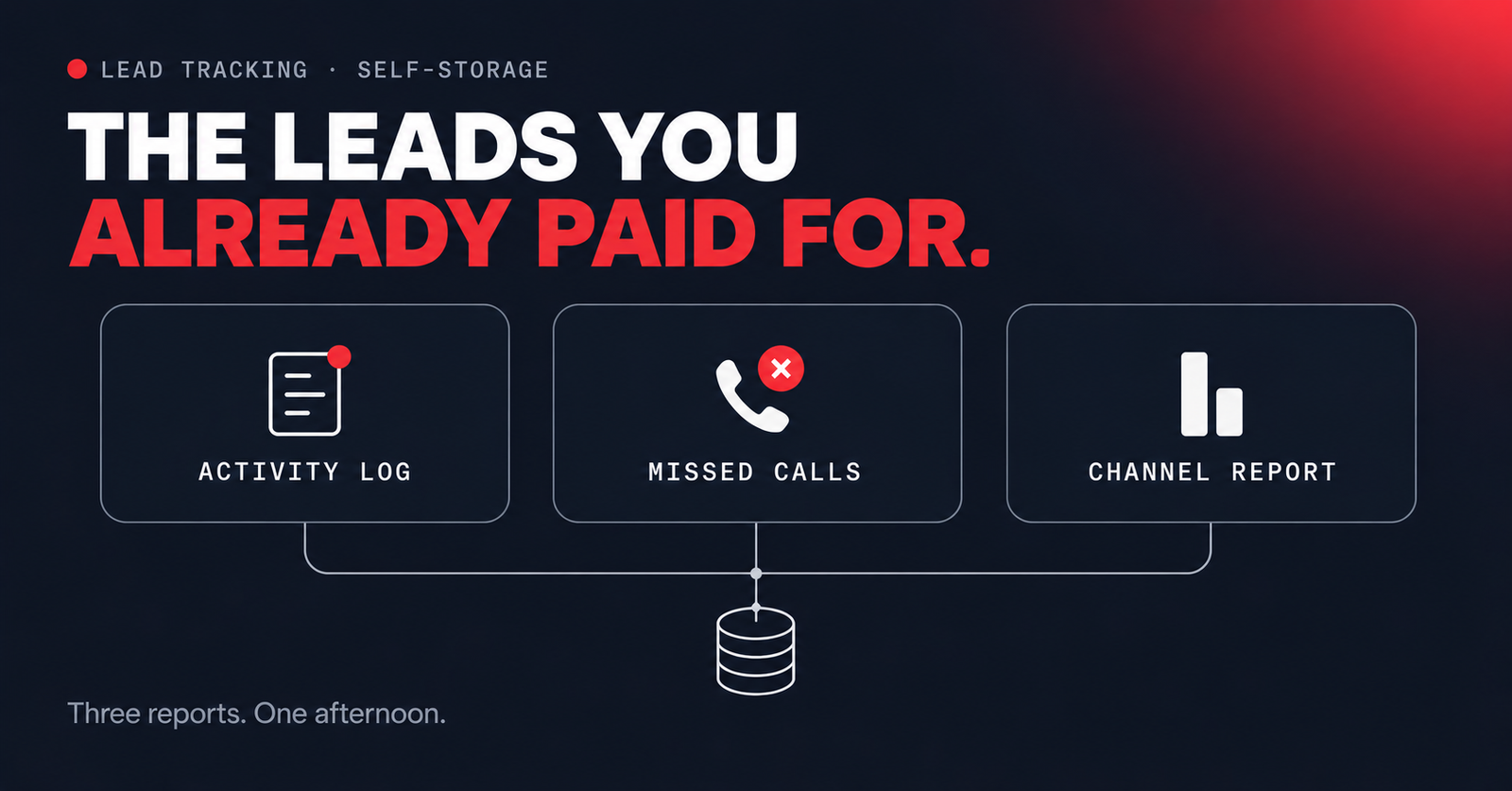
Three things to open this week
Not a project. An afternoon.
- Your activity log, filtered to overdue or never completed, against leads. Count them. Don't action them yet, just get the number.
- Last month's missed call report. Missed, not answered. Then split it by hour and day.
- Your channel report with two columns instead of one. Enquiries by channel, and move-ins by channel. If you only have the first column, that finding is worth more than the report.
If all three are easy to pull, you're in better shape than most and the numbers will tell you where to look next. If you can't pull them at all, that's the answer.
Common questions
A lead is the first unique contact from a prospect with storage intent, with a timer on it. Storage is event-driven, so the same person coming back after 90 days counts as a new lead, not a repeat. If two people in your business define a lead differently in writing, your conversion rate is an opinion, not a measurement.
An orphan lead is a task or activity created against a lead, assigned to someone, and never actioned. Not rejected, not lost, not disqualified, just sitting there. In a mid-sized self-storage operation, orphans are routinely in the hundreds or thousands, and every one was paid for through ad spend, clicks, and staff time.
Between 30% and 40% of inbound calls is normal for most self-storage operators, and almost nobody knows their own figure. Hours account for most of it: operators open Monday to Friday, 9 to 5 miss 30% to 40%; operators open seven days, 8 to 8 miss 10% to 20%. Storage decisions get made on Saturday afternoons, not Tuesday at 11am.
Because a reservation is not a win, it's a more qualified lead. If you offer free cancellation, expect 20% to 40% of reservations to cancel, so a meaningful share of that number never pays you anything. The only conversion that matters is lead to move-in, or lead to paying subscription if you take payment up front.
Not before you check whether the leads it delivered were actually actioned. A channel delivering plenty of enquiries that don't convert might be attracting the wrong people, but it might also be arriving at a time nobody answers, landing in an inbox with no owner, or routing to someone handling it badly. Same symptom, completely different fix.
Three checks you can run in an afternoon. Pull your activity log filtered to overdue or never completed against leads, and count them. Pull last month's missed call report (missed, not answered) and split it by hour and day. Pull a channel report with two columns instead of one, enquiries by channel and move-ins by channel. If you can't pull any of them, that's the answer.